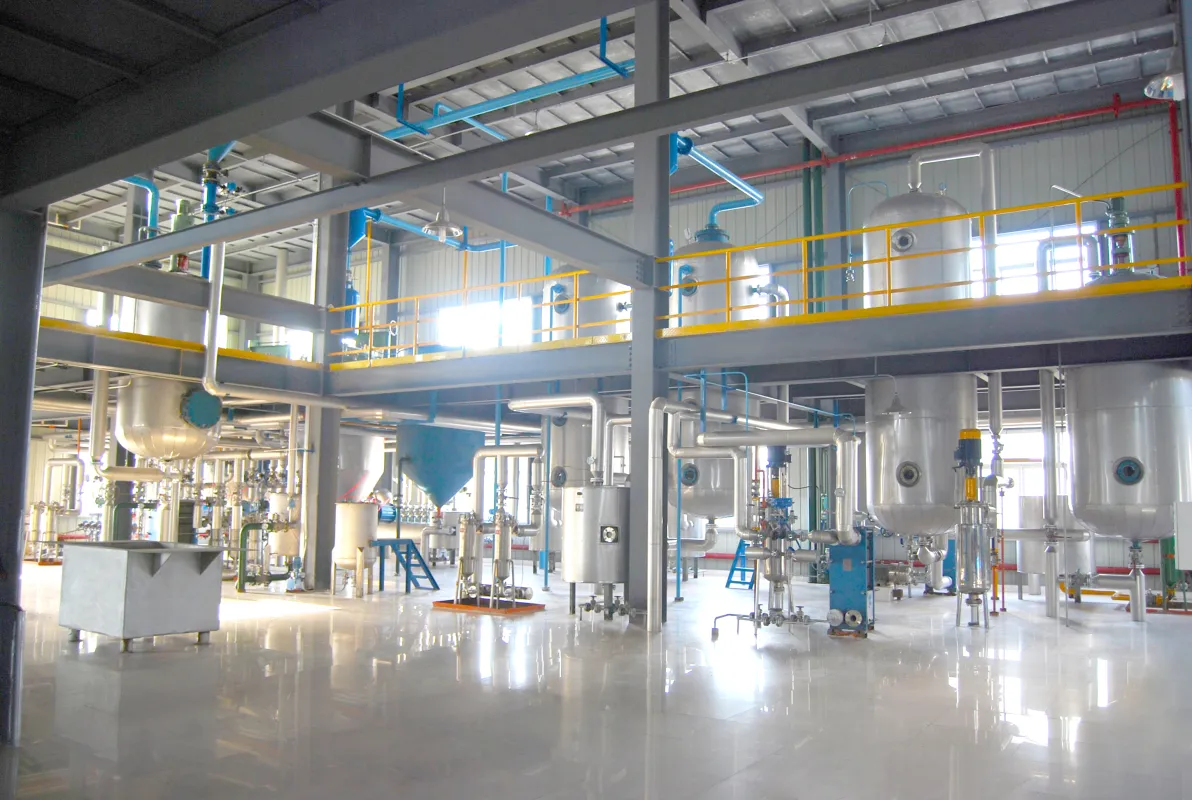
Russia boasts a leading global sunflower seed production capacity, and market demand for factories offering high-stability, high-oil-yield processing capabilities continues to grow. QIE GROUP, with automation at its core, provides sunflower seed oil factories with comprehensive solutions from raw material receiving to bottling. Compared to traditional methods, automated oil production lines not only shorten the commissioning cycle and significantly reduce overall energy consumption per ton, but also offer comprehensive improvements in quality consistency, traceability, and compliance, making them particularly suitable for the regulations and operating conditions of the Russian Federation and the Eurasian Economic Union (EAEU).
We divide the production process into three levels: equipment layer (intelligent sensing and servo), control layer (PLC/SCADA/DCS), and operation layer (MES/QMS/energy management). We use industrial Ethernet, OPC UA, Modbus, etc. to achieve equipment interconnection, supplemented by NIR online oil content detection and flow/temperature/viscosity closed-loop control to achieve stable process windows and predictable capacity output.
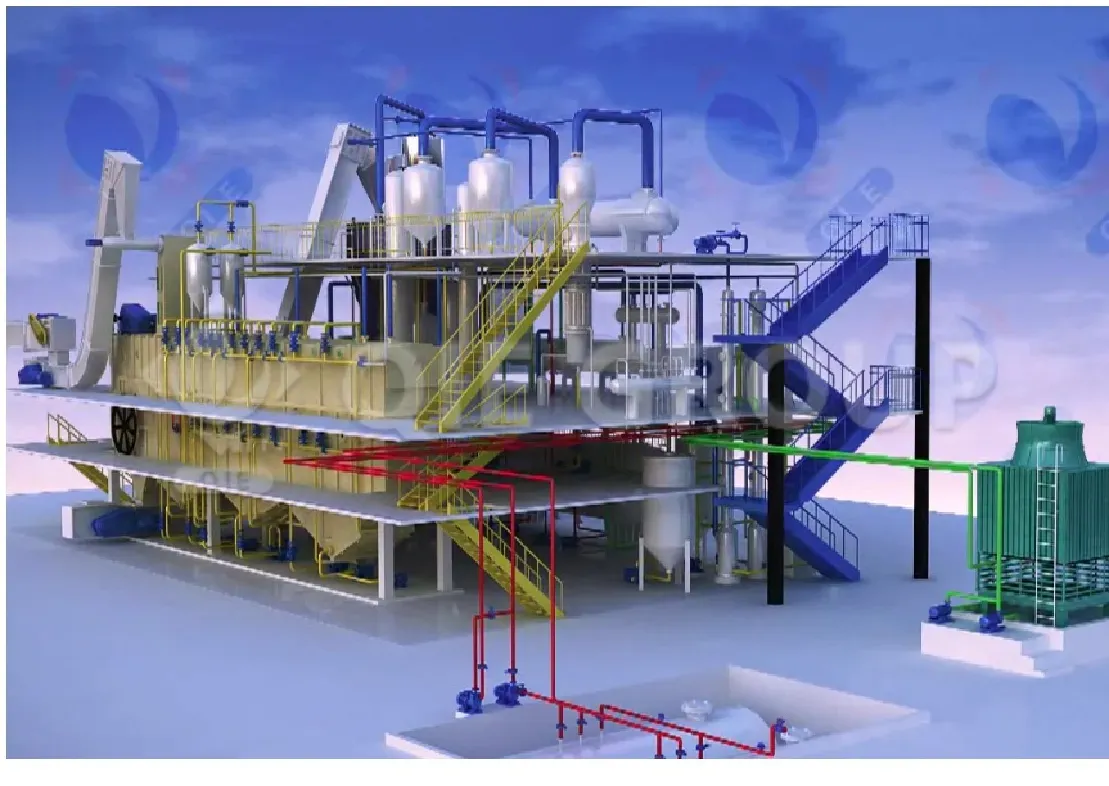
A complete automated sunflower seed oil production line typically includes: raw material cleaning – shelling – crushing – softening – tableting – steaming and roasting – pre-pressing – extraction – descaling – solvent recovery – crude oil refining (degumming/neutralization/bleaching/deodorization/wintering) – filling and storage. QIE GROUP sets visible KPIs for each stage to ensure stable oil production and safe operation.
Based on QIE GROUP's project experience in Russia and surrounding markets (50–1,200 TPD production lines), the average improvement range of automation upgrades is as follows:
| index | Before renovation (typical) | After automation (typical) | change |
|---|---|---|---|
| Overall Equipment Efficiency (OEE) | 70–78% | 85–92% | ↑ 10–15 percentage points |
| The remaining cake contains oil (from pre-pressing and extraction). | 8.0–9.5% | 6.5–7.5% | ↓ 1.5–3.0 percentage points |
| Electricity consumption (pressing + leaching stages) | 60–90 kWh/ton of seeds | 50–75 kWh/ton of seed | ↓ 12–18% |
| Steam consumption (including refining) | 180–260 kg/ton oil | 150–220 kg/ton oil | ↓ 8–15% |
| Labor efficiency (production line positions) | 5–7 people/class/line | 3-4 people/class/line | ↓ 35–50% |
Based on a 300 TPD production line, the overall cost reduction per ton resulting from energy consumption optimization and increased oil yield is typically 3–7%, with a payback period mostly concentrated in 12–24 months (depending on local energy structure, seed conditions, and capacity utilization). This model is particularly suitable for seasonally high-load operations in southern Russia and the Volga-Ural region.
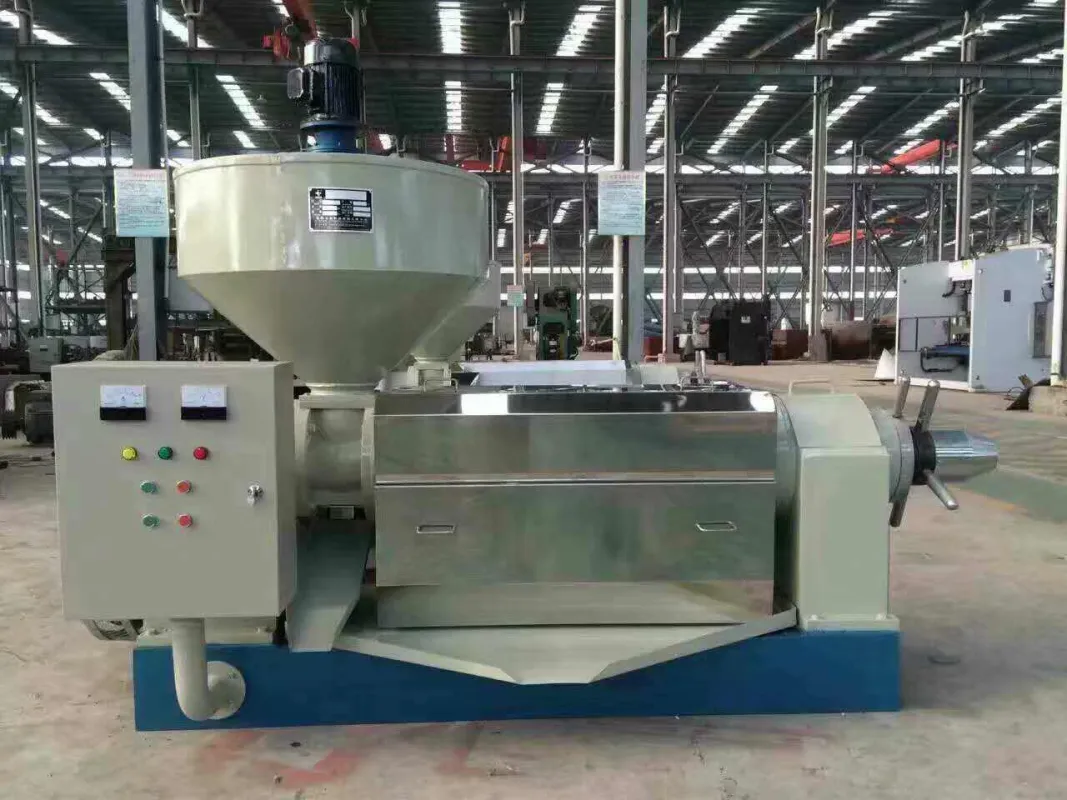
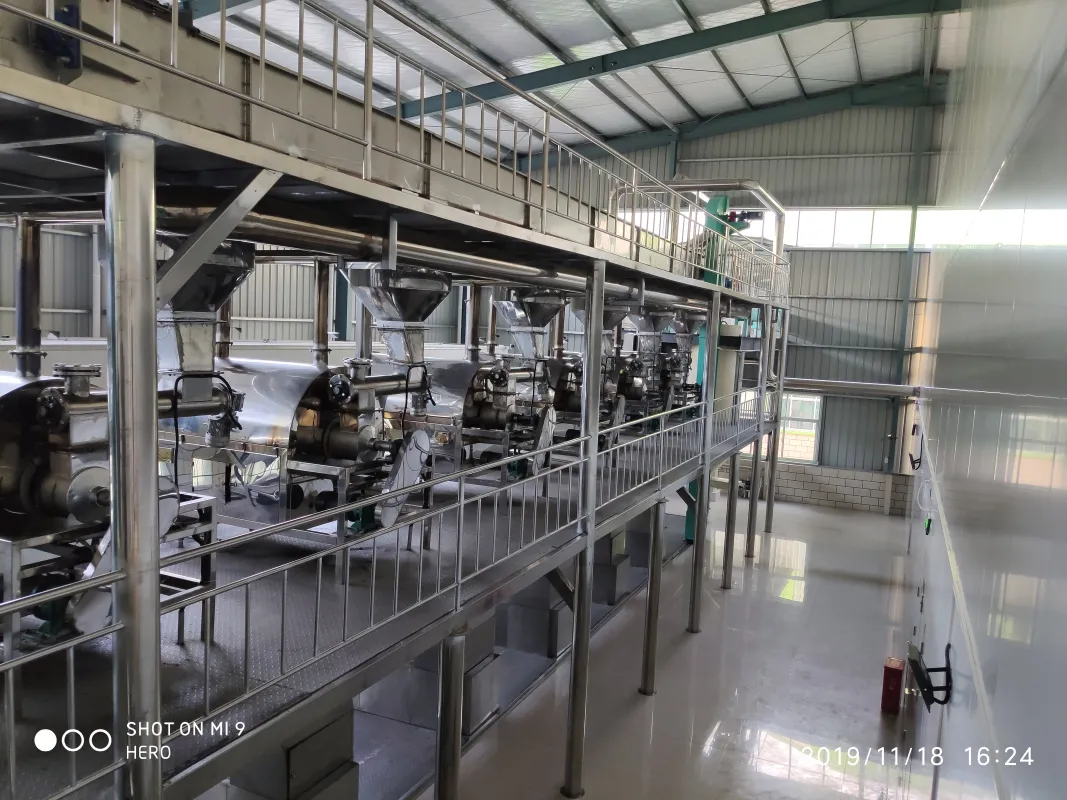
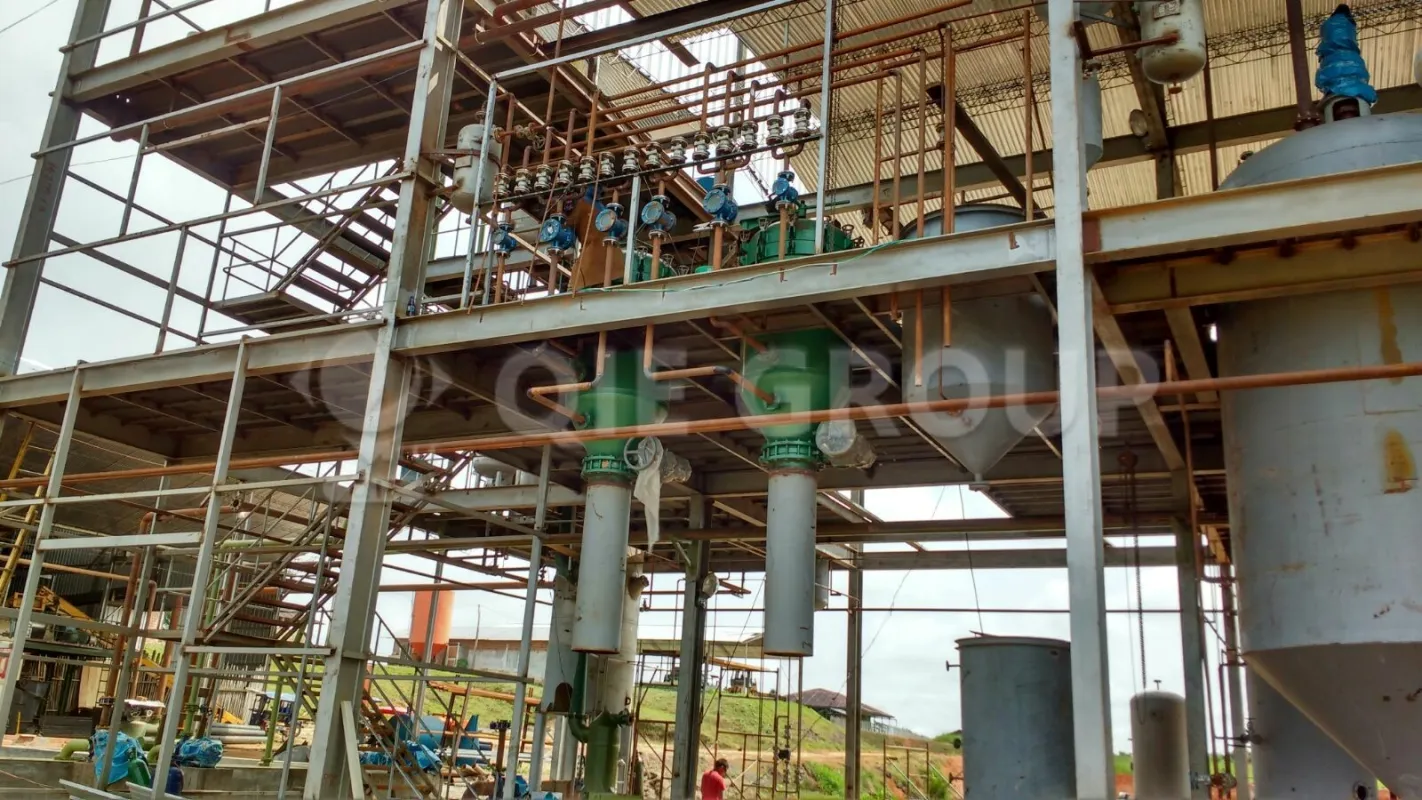
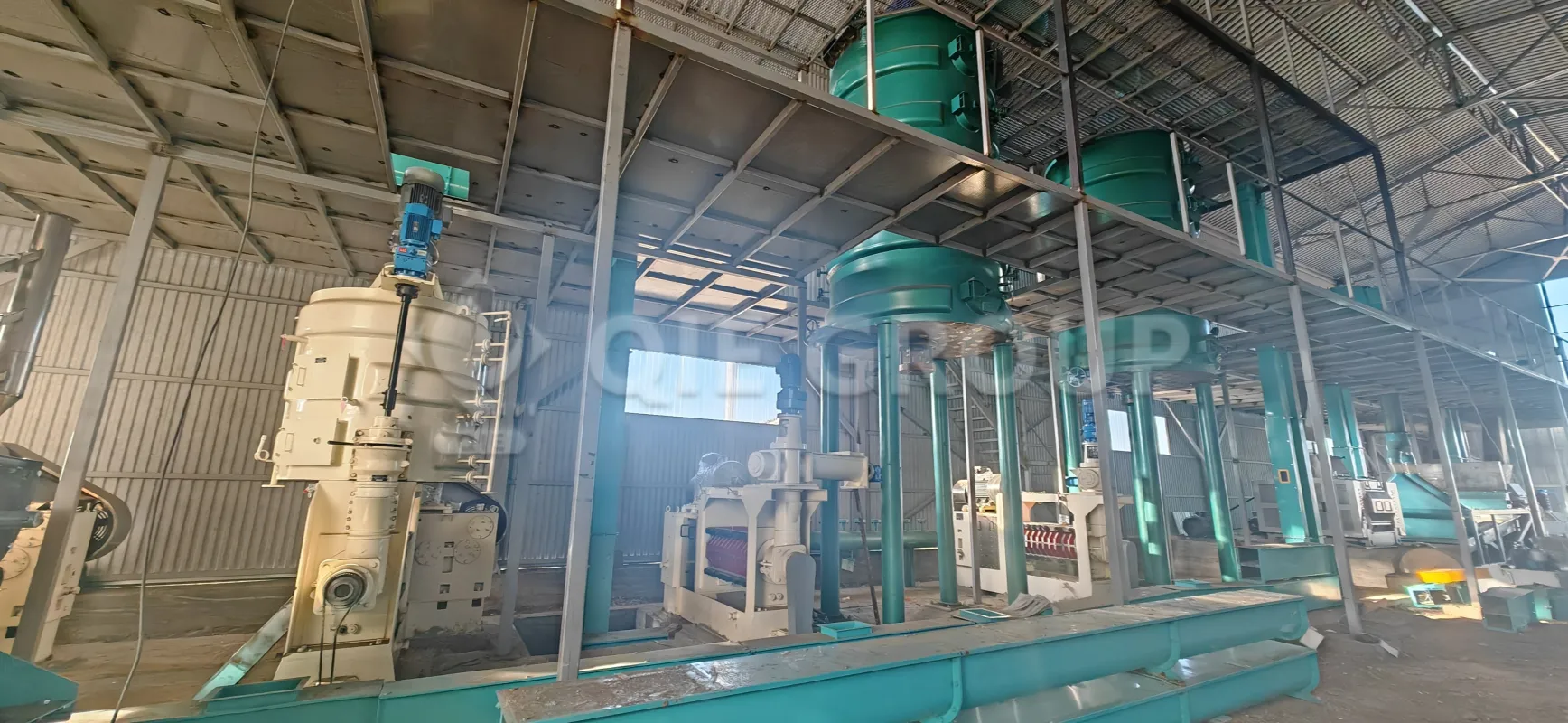
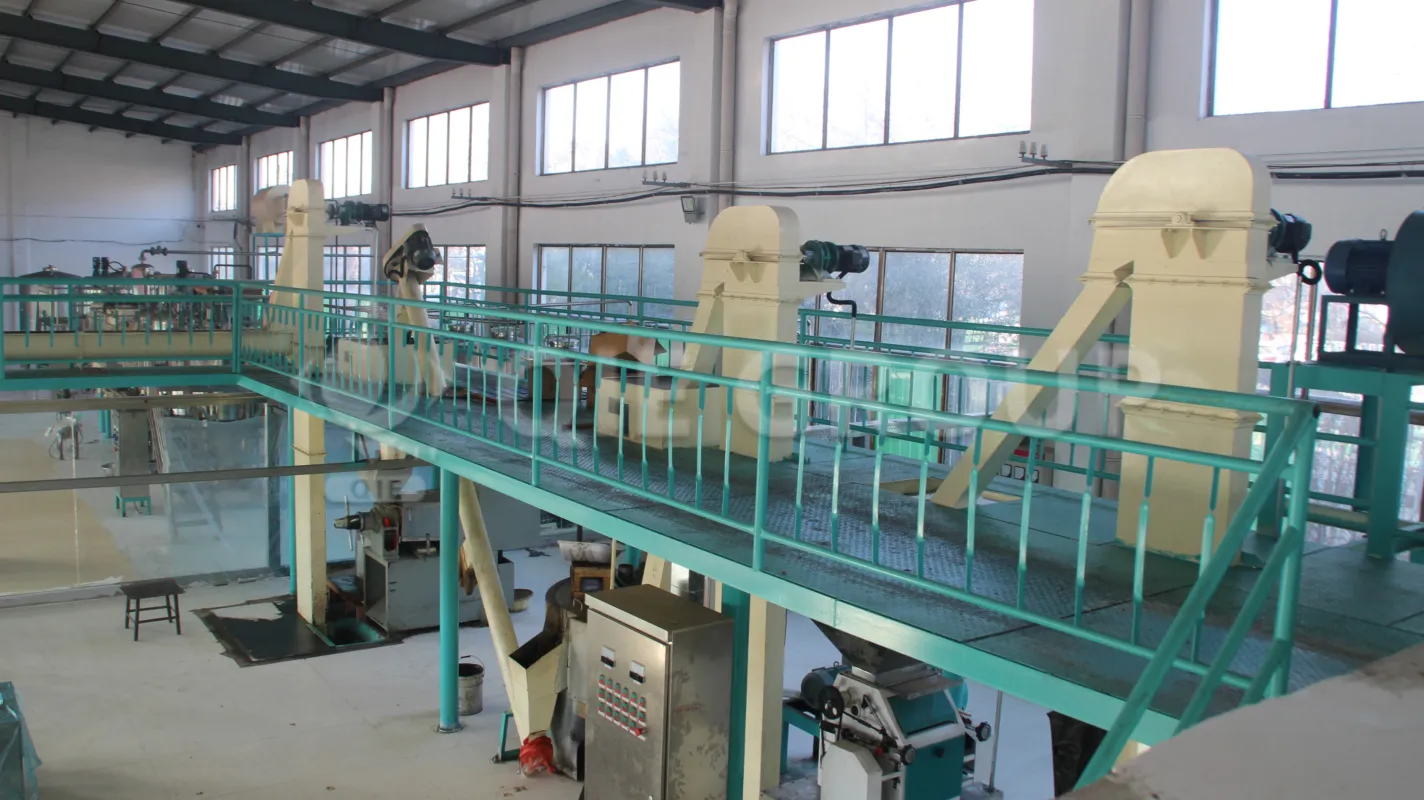
QIE GROUP provides matching sunflower seed oil production machines and control systems for automated sunflower seed oil production lines, covering the entire chain from pressing to extraction to refining to packaging.
The configuration priorities of automated oil production lines vary depending on their size. The following is a typical reference (which can be adjusted according to seed condition and oil quality standards):
| Scale (TPD) | Recommended process route | Key points of automation | Factory area (for reference) |
|---|---|---|---|
| 50–150 | Pre-compression + Leaching + Physical Refining | Integrated control cabinet, energy consumption dashboard, batch traceability | 3,500–6,000 m² |
| 200–400 | Pre-compression + Leaching + Chemical/Physical Refining + Winterization | SCADA central control, formula management, and hexane recovery optimization | 8,000–14,000 m² |
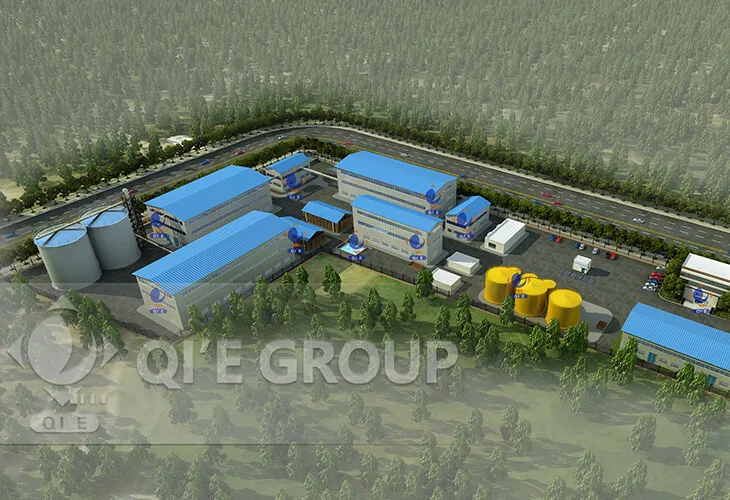
| 800–1,200 | Multi-line parallel processing + full-process MES + cold zone insulation system | OEE closed loop, energy EMS, electronic batch record, SIS interlocking | 20,000–35,000 m² |
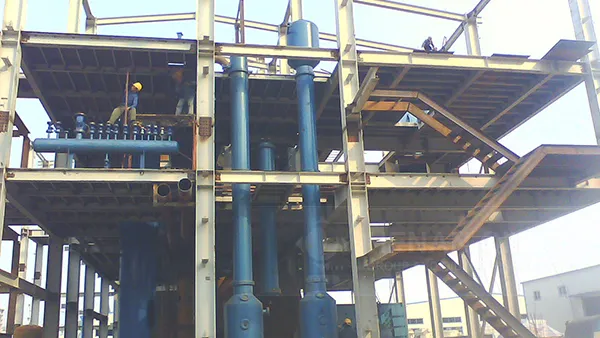
Both new construction and renovation can be deployed in a modular manner, and existing plants can be connected to the control system in sections during the uninterrupted production window to reduce the risk of downtime.
The assessment of automation investment should focus on total cost of ownership (TCO): energy consumption per unit of oil, solvent loss, labor and downtime, defective products and rework, maintenance and spare parts, and depreciation due to quality instability. The QIE GROUP incorporates these long-term costs into its design from the initial stages through methods such as optimizing its heat recovery network, hexane closure, and locking in formulation parameters.
For foreign trade projects, we can provide phased performance testing (FAT/SAT) and quantified KPI commitments to ensure the verifiability of the return model. Under the typical energy structure of the Russian market, the annual energy savings of a 300 TPD project translate to hundreds of thousands of kWh of electricity and considerable steam savings; such improvements can significantly mitigate cost risks in years of high oilseed volatility.
We will start with data modeling, providing a comparison of KPIs before and after the transformation and a cost recovery estimate, making the investment more controllable.
If you are evaluating the implementation plan for an automated sunflower oil production line, we recommend focusing on the following dimensions: process closed-loop capability, equipment reliability, data traceability depth, and total cost of ownership (TCO). In its experience with automated oil production line projects, QIE GROUP has developed an equipment selection and construction system adapted to the Russian market. The accompanying sunflower oil production machinery has been validated in cold regions, and its stability and ease of maintenance have withstood the test of long-term continuous operation.
1. Solution design: Raw material seed condition analysis, capacity definition, heat balance/material balance, process PFD/P&ID.
2. Engineering and Manufacturing: Equipment manufacturing, control program development, factory pre-acceptance (FAT), and EAC certification document preparation.
3. Installation and commissioning: On-site installation, start-up and commissioning (SAT), performance testing, and operator training (in Russian).
4. Maintenance and optimization: Spare parts and remote diagnostics, routine inspections, parameter re-optimization and energy-saving audits.
By linking the conditioning moisture and temperature, monitoring the torque of the main/auxiliary shaft of the press, and dynamically balancing the solvent ratio and circulation volume of the extractor, the oil content of the residual cake can be controlled within the target range (±0.3–0.5 percentage points).
By employing efficient condensation and recovery, sealed and leak-proof pumps, negative pressure and gas detection interlocks, and setting up leakage alarms and emergency plans at the SCADA level, losses can be reduced to 0.3–0.5 kg/ton of seeds, while meeting explosion-proof and environmental protection requirements.
MES/EMS systems that support OPC UA and REST API can interface with mainstream ERP systems to achieve seamless integration of orders, formulas, batches, and reports, thereby improving planning accuracy and inventory turnover efficiency.
Want to see firsthand the operational performance of an automated oil production line? QIE GROUP offers digital twin demonstrations and sample KPI reports, including comparative data on measured energy consumption, oil yield, and OEE. Click below to get a customized solution and on-site visit arrangements.
Get automated sunflower seed oil production line solutions
In the Russian market, whether you are planning new construction or digital transformation, the QIE GROUP can deliver verifiable production line performance and sustainable cost advantages per ton, based on data and prototype demonstrations. We welcome technical discussions regarding your raw material characteristics, capacity targets, and quality standards.
 Selection of cottonseed processing equipment
Comparison of mechanical pressing and solvent extraction
Cottonseed oil processing equipment
low-temperature oil extraction
sunflower seed oil nutrition retention
high-quality crude oil production
screw press technology
edible oil quality comparison
螺旋榨油机选型
植物油加工设备
榨油机出油率
连续式压榨设备
油脂加工技术
Single screw oil press
Double screw oil press
Screw oil press
Edible oil production line
Establishing edible oil production line
How to build an edible oil production line
Selection of cottonseed processing equipment
Comparison of mechanical pressing and solvent extraction
Cottonseed oil processing equipment
low-temperature oil extraction
sunflower seed oil nutrition retention
high-quality crude oil production
screw press technology
edible oil quality comparison
螺旋榨油机选型
植物油加工设备
榨油机出油率
连续式压榨设备
油脂加工技术
Single screw oil press
Double screw oil press
Screw oil press
Edible oil production line
Establishing edible oil production line
How to build an edible oil production line
.jpg?x-oss-process=image/resize,h_800,m_lfit/format,webp)


.png?x-oss-process=image/resize,h_100,m_lfit/format,webp)
.png?x-oss-process=image/resize,h_100,m_lfit/format,webp)
.png?x-oss-process=image/resize,h_100,m_lfit/format,webp)