.png?x-oss-process=image/resize,h_100,m_lfit/format,webp)
.png?x-oss-process=image/resize,h_100,m_lfit/format,webp)
.png?x-oss-process=image/resize,h_100,m_lfit/format,webp)
How to purchase a sunflower oil production line in Russia?
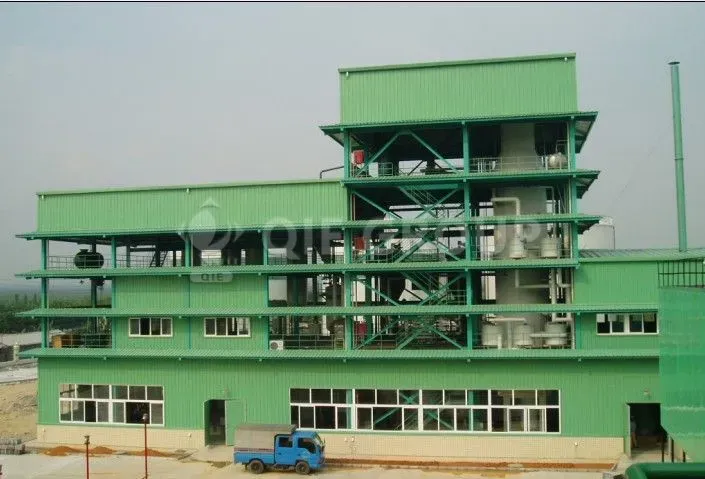
Russia is a major global producer and exporter of sunflower oil, with raw materials concentrated in the Southern Federal District, Volga Federal District, and parts of Siberia. For companies planning to establish or upgrade production lines, clear process selection, compliance solutions in accordance with EAEU regulations, and reliable localized services determine the investment efficiency and long-term stable operation of the project.
Why can Russian sunflower oil production lines be profitable?
Russia has a stable sunflower seed production, with a balanced focus on both domestic and export demand for oil products. Furthermore, its upstream planting, storage, and logistics systems are well-established. Local pressing and refining can significantly reduce the cost of cross-regional raw material transportation, increase oil yield and cash flow, and make purchasing sunflower seed oil production lines faster.
- Stable raw materials: The raw material radius in the southern and Volga regions is short, and the proportion of seasonal procurement and direct sourcing is high.
- The market is diversified: domestic sales of edible oil and export sales of bulk or bottled products are proceeding in parallel, and the demand for sunflower meal, a by-product, is strong in downstream feed.
- Policies and Standards: The EAEU has a unified technical regulatory framework with a clear compliance path.
Seven Key Questions About Purchasing a Sunflower Oil Production Line
- Process route: Cold pressing/Hot pressing/Pre-pressing + leaching (solvent)/Fully refined? Is the target finished product virgin (cold pressing) or RBDW (refined deodorization)?
- Capacity matching: 50–200 t/d (regional oil mills), 300–1,000 t/d (medium-to-large-sized factories). Will the expansion be carried out in phases?
- Energy consumption and utilities: electricity, steam, heat transfer oil, cooling water, compressed air, consumption indicators per ton of seed/finished product.
- Safety and compliance: EAEU TR CU 021/2011 (food safety), 022/2011 (labeling), 012/2011 (explosion protection) and GOST 1129-2013 (sunflower oil).
- Oils and by-products: oil yield, FFA, peroxide value, color index; sunflower meal protein and residual solvent targets.
- Automation and digitalization: formulation control, solvent recovery closed loop, OEE monitoring and SPC (statistical process control).
- Delivery and service: delivery time, FAT/SAT, Russian language materials and training, spare parts and maintenance plan.
Process selection: A customized route for a Russian sunflower seed oil production line
The optimal route is determined by the oil content (generally 40–46%), shell content, impurities, and seasonal moisture content of different raw materials. Based on Russian operating conditions, QIE GROUP commonly uses the following configurations:
| route | Applicable capacity | Reference oil yield | Energy consumption/key points | Remark |
|---|---|---|---|---|
| Cold pressing (cold pressing) | 50–150 t/d | 32–36% (depending on raw materials) | Low power consumption, flavor retention, and relatively low oil yield | Suitable for high-end virgin oils, requiring strict control of FFA and oxidation. |
| Hot pressing (steaming and roasting + pressing) | 100–400 t/d | 36–40% | Electricity and steam increase oil yield and partially denature proteins. | The common approach is to use oily residue, which makes subsequent refining easier. |
| Pre-compression + leaching (solvent No. 6/hexane) | 300–1,200 t/d | 42–46% (total yield) | High proportion of steam and heat transfer oil, solvent closed-loop recovery | Large production capacity and obvious unit cost advantage |
| Fully refined (degumming - neutralization - decolorization - winterization - deodorization) | 50–1,000 t/d (refined oil products) | Oil yield is affected by refining losses (generally 1.5–3.0%). | Steam and vacuum systems are critical; activated clay consumption. | Achieving RBDW targets to meet mainstream retail and export needs. |
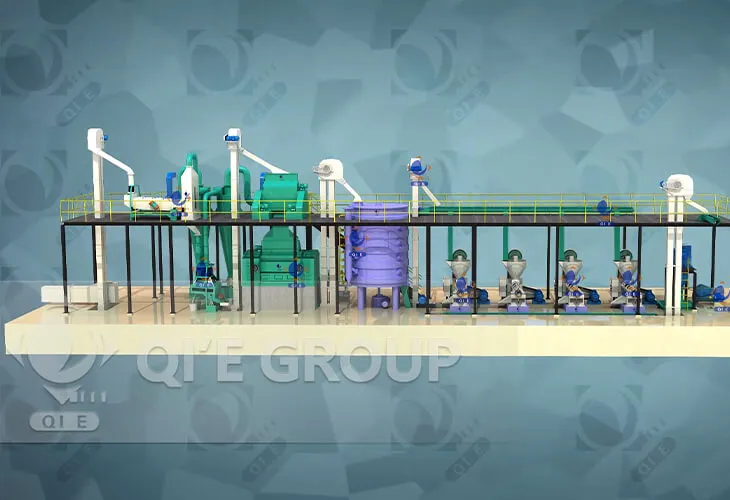
If the goal is to balance regional reach and exports, pre-pressing + leaching + full refining is a common combination for Russian sunflower oil production lines; if the focus is on high-end local flavored oils, cold pressing + light refining is more suitable.
QIE GROUP Compliance and Standards
When purchasing a sunflower oil production line in Russia, it is essential to ensure that the equipment and processes meet EAEU and GOST requirements.
- EAEU TR CU 021/2011 "Food Safety" requires the implementation of the HACCP system and the recording of critical control points.
- EAEU TR CU 022/2011 Food Labelling covers ingredients, allergens, nutrition labeling, and traceability.
- EAEU TR CU 012/2011 "Explosion-proof Equipment" applies to hexane/solvent leaching sections and requires the selection of Ex explosion-proof motors, instruments and electrical engineering.
- GOST 1129-2013, "Technical Specifications for Sunflower Seed Oil," provides a range of physicochemical indicators (acid value, peroxide value, color, impurities, and moisture, etc.).
- Environmental protection and VOCs: Solvent recovery rate target ≥99.5%, and solvent loss of No. 6 is generally controlled at 0.3–0.8 kg/t raw material.
QIE GROUP provides Russian versions of P&ID, electrical primary diagrams, circuit diagrams, material lists, SOPs and HACCP checklists upon delivery to facilitate on-site review and regulatory filing.
Core process modules and parameter recommendations
1) Raw material section and pretreatment
Cleaning (screening/destoning/magnetic separation) → Pre-drying → Desquamation → Rolling → Quenching and tempering. The desquamation rate is generally controlled at 18–25%, with the goal of increasing oil yield and reducing phospholipid and wax content.
- The target impurity content is ≤0.5%, and the moisture content is 6.5–8.5% (before pressing).
- A billet thickness of 0.25–0.35 mm facilitates the precipitation of oils and the penetration of solvents.
- Conditioning temperature 90–105°C (hot pressing), time 15–30 min.
2) Pressing and oil residue treatment
Hot-pressed cake typically contains 14–18% oil, making solvent extraction more economical; cold-pressed oil has better flavor but lower yield. The oil foots undergo sedimentation/centrifugation/filtration to reduce impurities and phospholipids carried into the refining stage.
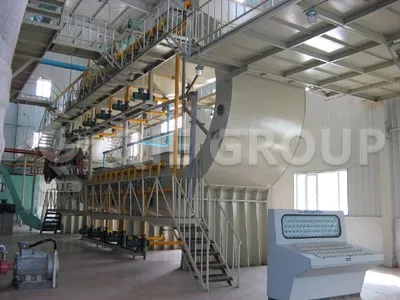
3) Leaching and solvent recovery (e.g., using pre-pressurization + leaching)
Commonly used processes include circulating flow or DTDC, with the solvent/feed ratio controlled at 1.2–1.6:1 (by mass). After drying and solvent removal, the residual solvent in the wet meal is generally ≤350 ppm, which meets the requirements for feed use.
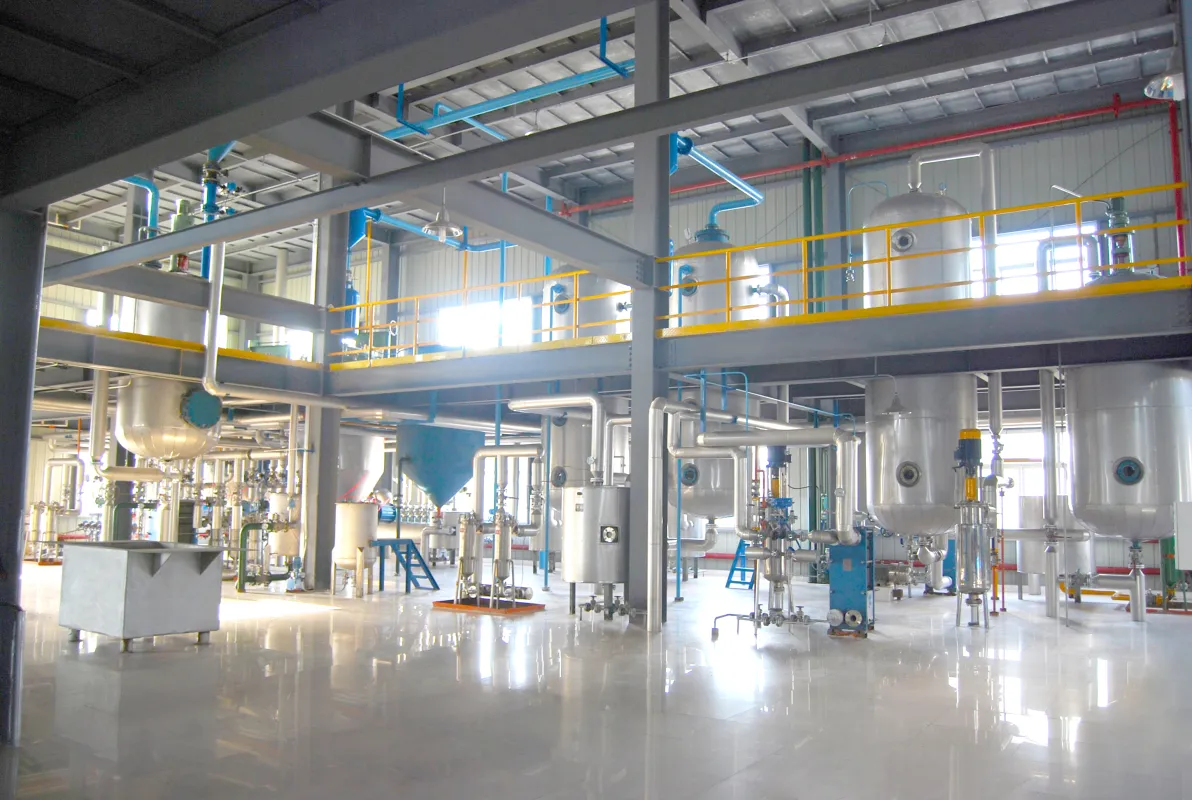
4) Refining stage (RBDW)
- Degumming: hydration/acidification, target total phosphorus ≤10 ppm (physical refining is more stringent).
- Neutralization: Reduces acid value and controls soap residue loss.
- Decolorization: 0.5–1.2% (m/m) of activated clay, adjusted according to crude oil quality.
- Winterization: Removes wax content and ensures clear brightness at low temperatures.
- Deodorization: 230–260°C, vacuum ≤3 mbar, removes odor components.
Energy consumption, utilities and environmental control
- Electricity consumption reference: 35–55 kWh/t raw material for pressing/pretreatment; 45–75 kWh/t for leaching.
- Steam: 0.8–1.2 MPa saturated steam, the total for leaching and refining stages is generally 180–350 kg/t of raw material (related to heat recovery).
- Heat transfer oil: used for insulation of deodorization towers and heat exchangers, with a temperature range of 230–260°C.
- Water and circulating water: process water 1.0–2.5 m³/t finished oil, circulating water tower needs to be equipped with antifreeze (cold regions).
- VOCs and odors are treated by solvent condensation and recovery, activated carbon adsorption, and exhaust gas combustion to achieve emission standards.
- Noise: Key fans and compressors are equipped with sound insulation and vibration reduction systems, ensuring that nighttime emissions meet standards.
QIE GROUP often employs integrated thermal design (plate heat exchanger + waste heat recovery) in its Russian projects to reduce steam consumption and refining losses.
Procurement process in Russia: from demand to production
- Demand analysis: Define daily processing capacity (t/d), product structure (virgin crushing/RBDW), raw material radius, and target market (bulk/bottled/export).
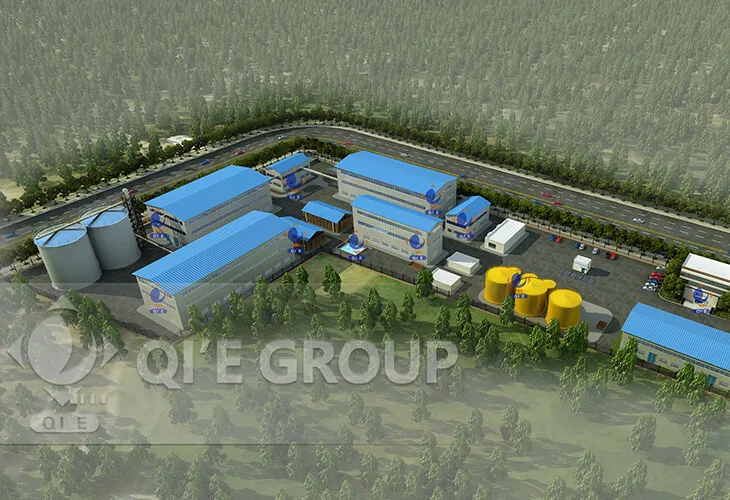
- Engineering Solution: QIE GROUP provides process packages, floor plans (including warehousing and logistics flow lines), energy consumption lists, and automation architecture.
- Samples and tests: Conduct small-scale/pilot-scale tests (degumming/wintering/deodorization parameter windows) if necessary.
- Business and Contracts: Incoterms (FCA/CIF/DAP, etc.), payment structure, guarantee and warranty terms; price not disclosed but delivery scope clearly defined.
- Manufacturing and FAT: The manufacturing cycle for critical equipment is typically 60–120 days; Factory Acceptance Testing (FAT) verifies control logic and performance.
- Customs clearance and compliance: EAEU conformity assessment (CoC/DoC), explosion-proof certification (if applicable); import VAT (usually 20%) is implemented in accordance with current regulations.
- Transportation and installation: Long-distance transport within Russia with cold and earthquake protection; simultaneous progress on foundation, steel structure, pipeline, electrical instrumentation, insulation and inert gas systems.
- SAT and trial operation: With materials involved, assess oil yield, energy consumption, solvent loss and finished product indicators, and sign off on performance acceptance.
- Maintenance and training: Spare parts kits, lubrication and inspection plans, HACCP record templates, remote diagnostics and routine inspections.
The entire cycle depends on capacity and approval efficiency. For a Russian sunflower oil production line of 300–600 t/d, it typically takes 6–10 months from signing the contract to reaching stable production.
Profit Model and Indicator Boundaries (Reference)
Even without disclosing the price, you can still use the following parameters to build internal calculations:
- Material balance: Raw seed oil content 40–46%; total yield from pre-pressing and leaching 42–46%; refining loss 1.5–3.0%.
- By-products: sunflower meal with 28-32% protein and 1-2% residual oil (depending on processing), with stable sales in the feed sector.
- Energy consumption costs: OPEX is composed of electricity, steam, activated clay, and additives.
- Capacity utilization rate: ≥85% is a good baseline; ≥92% is excellent.
- Solvent loss: Controlling it to 0.3–0.6 kg/t of raw material helps to significantly improve unit cost.
It is recommended to establish a weekly rolling model based on four factors: "pressing-meal price-energy consumption-refining loss" to dynamically evaluate marginal contribution and production scheduling strategy.
Why choose QIE GROUP?
- Complete turnkey capability: from raw material storage, pretreatment, pressing/leaching, refining/wintering/deodorization to bottling line.
- Design adapted for Russia: cold-region insulation and antifreeze, solvent explosion protection, Russian interface and documentation, and material and electrical selection that comply with EAEU and GOST standards.
- Energy efficiency and quality: thermal integration, vacuum system optimization, online quality monitoring (peroxide value, color, phosphorus content).
- Delivery and Service: FAT/SAT dual acceptance, spare parts and training package, remote operation and maintenance and periodic review, shortening the ramp-up period to reach full production capacity.
We understand that the buyer's core demand for the Russian sunflower oil production line is not "how expensive the equipment is," but rather "whether it can consistently meet standards, comply with regulations, operate with low energy consumption, and achieve a rapid return on investment." This is precisely the direction that QIE GROUP has been deeply committed to for a long time.
Practical Checklist: Let's Get Started
- Organize raw material data: oil content, shell content, seasonal moisture content, and supply radius.
- Define the product mix: cold-pressed flavored oils/bulk RBDW/retail bottled oils, and the target market.
- Selecting process routes and production capacity: Assess the feasibility of phased expansion by considering energy consumption and compliance costs.
- Contact the engineering contractor: Request PFD/P&ID, floor plan, energy consumption meters, and automation list.
- On-site condition verification: plant site, foundation, steam and electricity, environmental protection and fire protection.
- FAT/SAT Planning: Establish acceptance criteria, agree on production curves and training arrangements.
If you are evaluating the purchase of a sunflower seed oil production line, please send us the basic parameters. QIE GROUP will provide a preliminary process and energy consumption assessment within 72 hours.
Get a one-on-one solution for Russian sunflower oil production line
Contact the QIE GROUP engineering team now to customize a compliant, feasible, and low-energy turnkey solution (including energy consumption list and layout diagram) based on your raw materials and market objectives.
Contact QIE GROUP to purchase a sunflower seed oil production line.