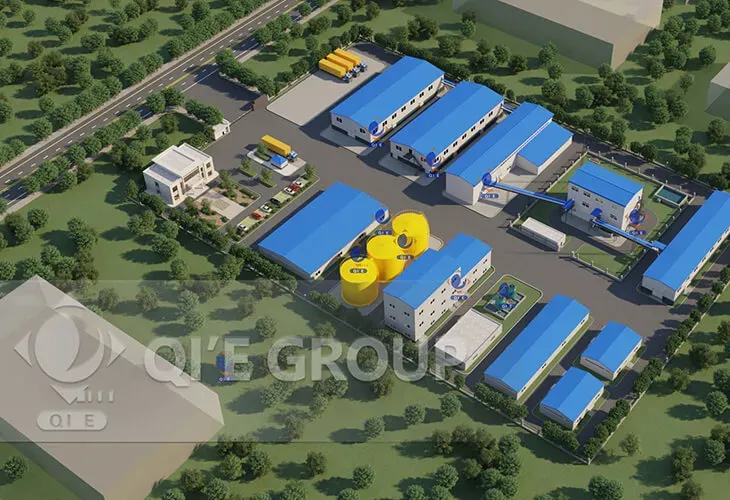
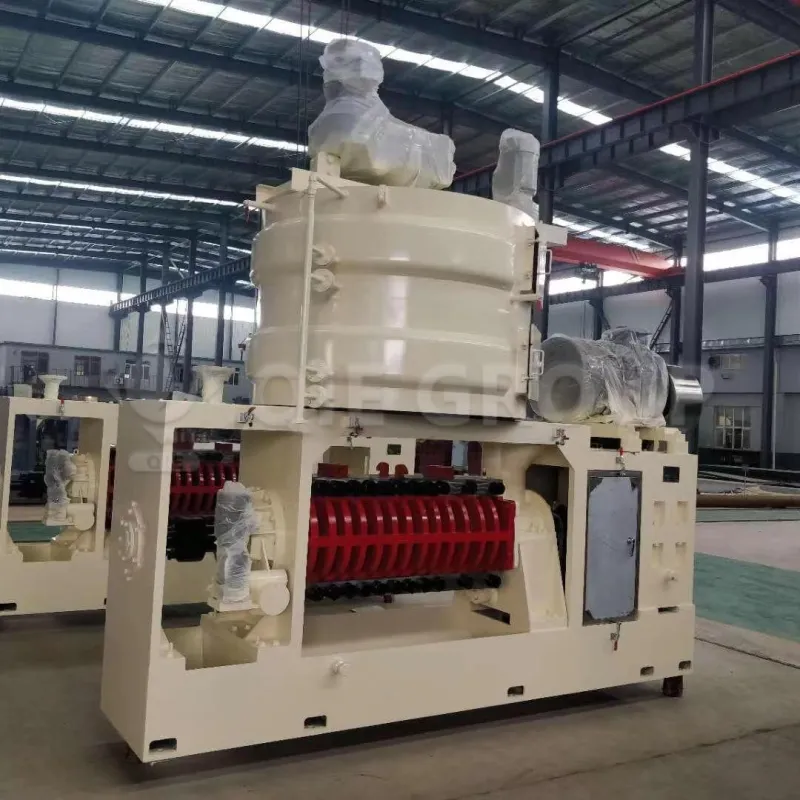
For most coconut oil projects, a full pressing coconut oil production line is often the preferred solution when investment budget, operational simplicity, and faster project deployment are the primary concerns. Pre-pressing and solvent extraction generally become more attractive for larger-scale facilities where maximizing oil recovery can justify the additional investment and operational complexity.
The key decision is not which technology extracts more oil. The real question is whether the additional oil recovered can generate sufficient value to offset the higher capital investment, energy consumption, compliance requirements, and management costs.
For investors evaluating a coconut oil factory investment cost, focusing only on equipment quotations can be misleading. Long-term profitability depends on a combination of oil recovery, operating expenses, raw material utilization, labor efficiency, and regulatory compliance.
This report compares full pressing and pre-pressing & solvent extraction routes from the perspectives of investment, operating cost, oil recovery, project scale, and return on investment, helping decision-makers select the most appropriate coconut oil production line for their business objectives.
One of the most common mistakes in edible oil project planning is applying soybean or sunflower oil processing logic directly to coconut oil projects.
Copra, the primary raw material for coconut oil production, typically contains significantly higher oil content than many conventional oilseeds. According to technical references published by the Food and Agriculture Organization (FAO) and industry literature from the American Oil Chemists' Society (AOCS), copra oil content commonly ranges between 60% and 68%, depending on drying quality, variety, and storage conditions.
This characteristic creates several important realities:
As a result, the optimal coconut oil production line is not determined solely by extraction technology. It is determined by how effectively the chosen route aligns with the project's scale, operating environment, and long-term profitability goals.
The full pressing route remains one of the most widely adopted solutions for small and medium-scale coconut oil projects.
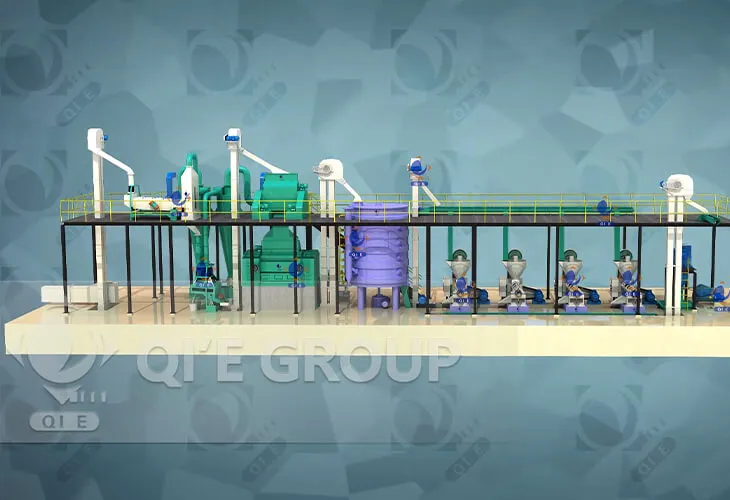
The process typically includes:
The purpose of double pressing is to maximize mechanical oil recovery while maintaining relatively simple plant operation.

For many first-time investors, the lower complexity of a full pressing coconut oil production line often outweighs the potential benefits of pursuing maximum extraction efficiency.
In this route, copra first passes through a mechanical pre-pressing stage.
The remaining oil contained in the press cake is then recovered using solvent extraction technology.
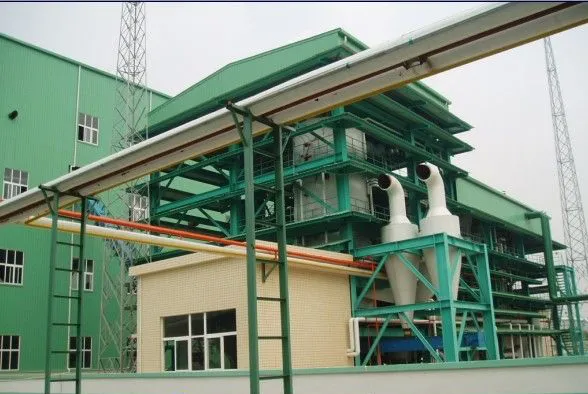
A typical extraction facility may include:
The objective is to minimize residual oil losses and maximize utilization of raw materials.

When investors search for coconut oil production line cost, they are usually trying to understand which route delivers the best balance between investment and profitability.
The comparison below provides a more practical framework than equipment price alone.
| Evaluation Factor | Full Pressing | Pre-Pressing & Solvent Extraction |
|---|---|---|
| Initial Equipment Investment | Lower | Higher |
| Civil Construction Requirement | Lower | Higher |
| Installation Complexity | Lower | Higher |
| Automation Requirement | Moderate | Higher |
| Energy Consumption | Moderate | Higher |
| Labor Requirement | Lower | Higher |
| Maintenance Cost | Lower | Higher |
| Environmental Compliance Cost | Lower | Higher |
| Oil Recovery Potential | Good | Higher |
| Operational Complexity | Lower | Higher |
| Expansion Flexibility | Moderate | Strong |
| Suitability for Large-Scale Production | Moderate | Strong |
The most important observation is that extraction projects increase both potential revenue and operational responsibility.
Higher recovery comes with higher management requirements.
Many discussions focus on extraction rate alone.
In reality, investors should focus on profitability rather than recovery percentage.
A useful project evaluation framework is:
The best-performing project is not necessarily the one that extracts the highest percentage of oil.
The best-performing project is the one that generates the highest sustainable profit after accounting for all operating and investment costs.
This distinction becomes particularly important when evaluating large solvent extraction investments.
One of the most common questions investors ask is whether project size alone can determine the most suitable processing route.
In practice, capacity is only one factor. Copra cost, labor availability, environmental requirements, and expansion plans often have a greater impact on long-term profitability.
The following matrix can serve as an initial screening tool.
| Project Profile | Typical Investment Objective | Recommended Route | Primary Decision Driver |
|---|---|---|---|
| Pilot or Entry-Level Project | Faster market entry and lower investment exposure | Full Pressing | Simplicity and lower capital requirement |
| Small Commercial Plant | Stable local market supply | Full Pressing | Easier operation and maintenance |
| Growing Regional Producer | Balance between recovery and investment | Case-by-case evaluation | Raw material cost and growth strategy |
| Large Industrial Processor | Maximum utilization of copra | Pre-Pressing & Solvent Extraction | Oil recovery and scale economics |
| Integrated Edible Oil Group | Long-term optimization of raw material value | Pre-Pressing & Solvent Extraction | Operational efficiency and resource utilization |
Pre-pressing and solvent extraction are often associated with higher oil recovery. However, higher recovery does not automatically translate into higher profitability.
Projects may struggle to justify extraction investment when:
Under these conditions, a well-designed full pressing coconut oil production line may generate stronger returns despite recovering less oil.
This perspective is frequently overlooked during early-stage project planning.
The most profitable solution is not necessarily the one with the highest oil recovery rate. It is the solution that best aligns with the project's raw material supply, management capability, and long-term business objectives.
Before comparing coconut oil production line prices from different suppliers, investors should prepare the following information:
Request suppliers to provide:
Without these parameters, comparing quotations alone can lead to inaccurate investment decisions.
Choosing between a full pressing coconut oil production line and a pre-pressing & solvent extraction plant should be based on total project economics rather than equipment price alone.
For many small and medium-sized coconut oil projects, full pressing provides lower investment risk, easier operation, and faster project implementation. For larger facilities processing substantial volumes of copra, solvent extraction may create additional value through improved oil recovery and raw material utilization.
The most effective decision-making approach combines investment cost, operating expenses, oil recovery, compliance requirements, and long-term profitability into a single evaluation framework.
Senior Edible Oil Solution Engineer | QIE GROUP
Jack Li has more than 18 years of experience in edible oil processing plant design, equipment selection, and turnkey project implementation. His project portfolio includes coconut oil, palm oil, soybean oil, sunflower oil, rice bran oil, and shea butter processing facilities across Asia, Africa, and Latin America.
He has participated in the design and optimization of mechanical pressing plants, solvent extraction facilities, and integrated refining systems ranging from small commercial operations to large industrial projects.
1. Is a Full Pressing Coconut Oil Production Line Profitable Without Solvent Extraction?
Yes. Many commercial coconut oil plants operate successfully using full pressing alone. Profitability depends on copra cost, oil market prices, operating efficiency, and plant utilization rather than extraction technology alone.
2. What Factors Have the Greatest Impact on Coconut Oil Production Line Cost?
The most significant factors include processing capacity, process route, automation level, environmental protection requirements, utility systems, and refining configuration. Equipment price is only one component of total project investment.
3. At What Stage Should Investors Consider Solvent Extraction?
Solvent extraction becomes more attractive when the value of additional recovered oil can justify higher investment, operating costs, and compliance requirements. This assessment should be based on a detailed feasibility study rather than equipment quotations alone.
4. How Does Copra Quality Affect Equipment Selection?
Oil content, moisture level, impurity content, and storage condition all influence equipment configuration, operating efficiency, and overall project economics. Reliable raw material data is essential during project planning.
5. What Hidden Costs Are Often Overlooked in Coconut Oil Factory Investment Calculations?
Commonly overlooked costs include utility infrastructure, environmental compliance systems, operator training, spare parts inventory, maintenance labor, insurance, and future expansion requirements. These costs can significantly affect long-term profitability.
Need help planning your coconut oil production plant? Contact our solution engineers to design a high-efficiency processing line tailored to your specific budget and scale.
Contact Our Engineers 2026 Edible Oil Production Line
 machine list
2026 Edible Oil Production Line latest price
2026 Edible Oil Production Line machine latest price
Small to large scale soybean oil production line capacity
Soybean oil processing plant cost and profit analysis
Soybean oil solvent extraction and refining process flow
Reliable soybean oil machinery supplier from China
2026 Shea Butter Turnkey Production Line
2026 Machinery Required for a Shea Butter Turnkey Production Line
Projected Cost for a Shea Butter Turnkey Production Line in 2026
Shea butter extraction process steps
Manufacturer of fully automatic shea butter production equipment
Industrialized shea butter processing plant
lifespan of soybean oil production line
Average service life of edible oil refineries
Factors affecting the mechanical durability of soybean oil extraction
Maintenance techniques to extend the operating time of soybean oil plants
2026 Edible Oil Production Line
2026 Edible Oil Production Line machine list
2026 Edible Oil Production Line latest price
2026 Edible Oil Production Line machine latest price
Small to large scale soybean oil production line capacity
Soybean oil processing plant cost and profit analysis
Soybean oil solvent extraction and refining process flow
Reliable soybean oil machinery supplier from China
2026 Shea Butter Turnkey Production Line
2026 Machinery Required for a Shea Butter Turnkey Production Line
Projected Cost for a Shea Butter Turnkey Production Line in 2026
Shea butter extraction process steps
Manufacturer of fully automatic shea butter production equipment
Industrialized shea butter processing plant
lifespan of soybean oil production line
Average service life of edible oil refineries
Factors affecting the mechanical durability of soybean oil extraction
Maintenance techniques to extend the operating time of soybean oil plants


.jpg?x-oss-process=image/resize,h_800,m_lfit/format,webp)




.png?x-oss-process=image/resize,h_100,m_lfit/format,webp)
.png?x-oss-process=image/resize,h_100,m_lfit/format,webp)
.png?x-oss-process=image/resize,h_100,m_lfit/format,webp)