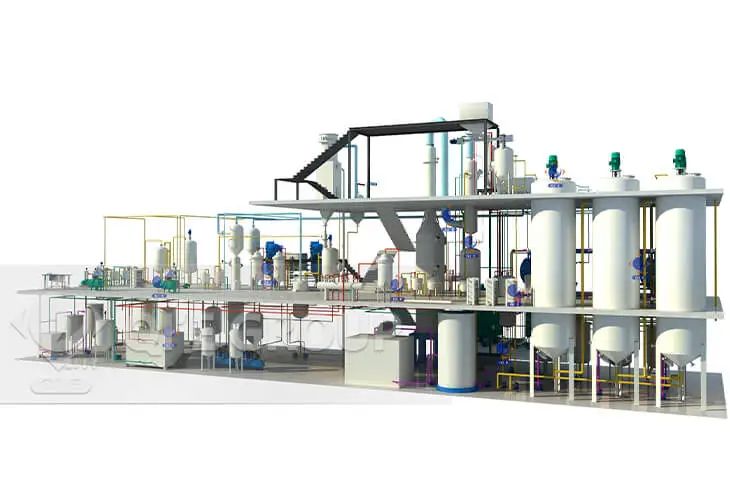
Choosing the right capacity for a sesame oil processing plant requires matching reliable sesame seed supply, expected production demand, and the processing capability of the complete production line.
The correct approach is to first calculate how much sesame seed can be supplied and processed annually, then convert this requirement into daily and hourly throughput. After that, the equipment capacity should be selected based on the required processing flow, operating conditions, and future expansion plans.
A sesame oil processing plant capacity refers to the amount of sesame seeds processed per day, not the final oil output. For example, a 10 TPD sesame oil plant means the facility is designed to process approximately 10 tonnes of sesame seeds per day. The actual oil production depends on seed quality, extraction method, processing efficiency, and oil losses.
Choosing the correct capacity helps investors avoid two common problems:
The first factor in selecting sesame oil processing plant capacity is the amount of sesame seeds that can be supplied consistently.
Plant capacity should be based on reliable annual raw material availability rather than the maximum amount available during harvest season.
The basic calculation is:
Daily seed processing capacity = Annual available sesame seed supply ÷ Annual operating days
Example:
Calculation:
3,000 ÷ 300 = 10 tonnes/day
Based on this calculation, a 10 TPD sesame oil processing plant matches the available raw material supply.
However, the actual design should also consider:
A plant should have enough raw material support to maintain stable operation after installation.
The calculated daily processing requirement does not always equal the required equipment rating.
In real production, plants need to consider:
A more practical calculation is:
Required equipment capacity = Annual seed processing target ÷ (Operating days × Expected utilization rate)
Example:
A company wants to process 3,000 tonnes of sesame seeds annually.
Assumptions:
Calculation:
3,000 ÷ (300 × 0.90)
= 11.1 tonnes/day
This means the selected production line may need a rated capacity slightly higher than 10 TPD to achieve the annual processing target under actual operating conditions.
The utilization rate is a project planning factor, not a fixed industry standard. The final value should be confirmed according to production conditions and engineering requirements.
When selecting a sesame oil processing plant, buyers should clearly distinguish between seed input capacity and oil output.
A plant capacity is normally expressed as:
These values are different.
Oil output depends on:
The calculation method is:
Estimated oil output = Sesame seed input × Expected oil recovery rate
Example:
For a 10 TPD sesame oil plant:
Estimated oil output:
10 × 0.40 = 4 tonnes/day
This is only a planning example. Actual oil recovery must be confirmed through raw material testing and process design.
The oil content of sesame seeds should not be considered the same as commercial oil recovery because some oil remains in press cake and some losses occur during processing.
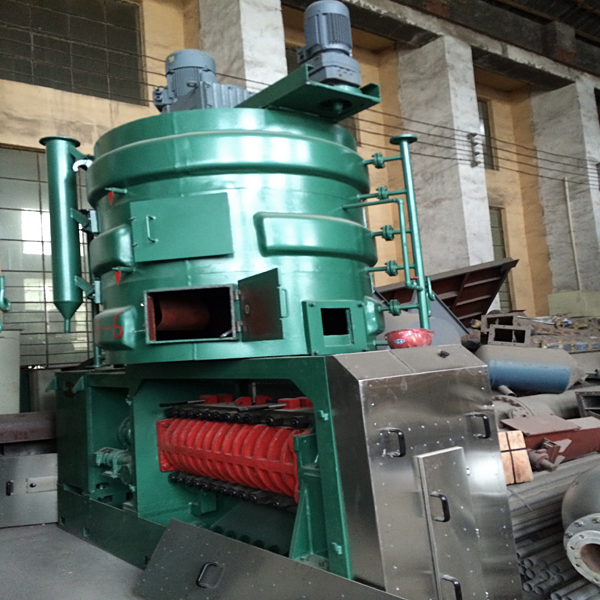
Different plant capacities are suitable for different raw material supply levels and investment plans.
| Plant Capacity | Approximate Annual Sesame Seed Processing (300 Days/Year) | Suitable Situation |
|---|---|---|
| 5 TPD | 1,500 tonnes/year | Small projects with limited raw material supply or market testing |
| 10 TPD | 3,000 tonnes/year | Small and medium commercial sesame oil production |
| 20 TPD | 6,000 tonnes/year | Projects with stable sesame purchasing channels and higher production demand |
| 50 TPD | 15,000 tonnes/year | Larger industrial projects with strong raw material and market support |
These values are examples for capacity planning. The suitable capacity depends on actual raw material availability, product demand, and investment objectives.
A larger plant is not always a better choice. If raw material supply or sales demand cannot support the designed throughput, unused capacity can increase investment pressure and reduce operating efficiency.
After determining the required processing capacity, each production section should be designed to maintain the same material flow.
The main capacity considerations include:
| Processing Section | Capacity Consideration |
|---|---|
| Sesame seed cleaning | Must handle the incoming seed flow before processing |
| Conditioning system | Must provide continuous prepared seeds for pressing |
| oil pressing system | Must achieve the required seed throughput under designed conditions |
| Filtration system | Must handle the expected crude oil flow |
| Refining system (if required) | Must match the refined oil production target |
| Storage system | Must support production volume and shipment requirements |
When reviewing equipment quotations, buyers should confirm:
A high-capacity oil press alone cannot increase production if other sections become bottlenecks.
The selected product requirements also influence plant capacity design.
For example:
Before confirming capacity, buyers should define:
The selected capacity should match the complete production scope, not only one machine.
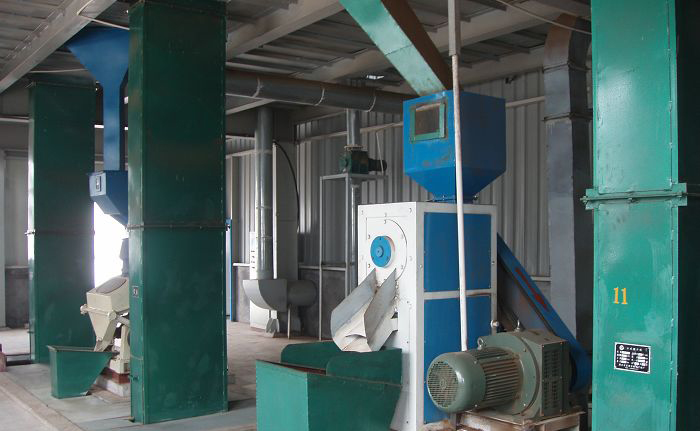
The investment cost of a sesame oil processing plant increases with capacity, but capacity is not the only factor.
Main cost factors include:
When comparing different capacity options, buyers should evaluate:
Confirm whether the quotation is based on:
Check whether the quotation includes:
Compare:
A larger plant may achieve better efficiency when fully utilized, but an oversized plant can increase investment costs if production demand is insufficient.
A company plans to build a sesame oil processing plant based on stable local sesame supply.
Project information:
Daily processing requirement:
3,000 ÷ 300
= 10 tonnes/day
Hourly throughput:
10 ÷ 16
= 625 kg/hour
Based on this calculation, the production line should be designed to continuously process approximately 625 kg of sesame seeds per hour.
The equipment configuration should then be evaluated according to:
This example shows the basic capacity selection process. The final plant design should be confirmed based on actual sesame characteristics and engineering evaluation.
To obtain an accurate technical proposal, buyers should prepare:
Providing these details allows suppliers to design equipment based on actual production conditions instead of only a requested capacity value.

Calculate the reliable annual sesame seed supply first, then divide it by planned operating days to determine daily processing capacity. After that, adjust the required equipment size according to operating hours and expected utilization.
Assuming 300 operating days per year:
10 tonnes/day × 300 days
= 3,000 tonnes of sesame seeds annually
Actual requirements may vary depending on downtime, storage losses, and production planning.
The suitable capacity depends on sesame seed availability, market demand, investment budget, and future expansion plans. The best capacity is the one that can maintain stable operation rather than simply the largest possible size.
No. Larger plants may reduce unit costs when operating at high utilization, but excessive capacity can increase investment and operating costs if raw material supply or sales demand is insufficient.
Yes. Expansion should be considered during the initial engineering stage. Space, utilities, equipment arrangement, and future production requirements should be evaluated before construction.
The right sesame oil processing plant capacity is determined by reliable sesame supply first, then adjusted according to operating conditions, equipment utilization, product requirements, and future expansion plans.
A practical selection process includes:
A properly sized sesame oil processing plant can achieve stable operation, better equipment utilization, and more predictable investment performance.
Author: QIE GROUP Process Engineer
Plant capacity should always be evaluated as a complete processing system. Increasing the capacity of one machine cannot solve production limitations if other sections of the production line cannot maintain the required material flow.
Ready to set up your sesame oil processing plant? Get in touch with our experts today for tailored engineering advice and a custom proposal.
Contact Us Now Corn germ oil pre-pressing and extraction unit Large-scale corn germ oil processing production line Corn germ oil solvent extraction process corn germ oil production line
Corn oil press plant solutions Small corn oil processing equipment Mechanical extraction of corn germ oil
oil processing plant quotation compare oil processing plant quotations oil processing plant quotation checklist oil plant quotation comparison oil processing plant supplier comparison oil processing plant equipment quotation
oil mill capacity oil mill production capacity how to increase oil mill capacity oil mill capacity optimization
soybean oil yield how to increase soybean oil yield soybean oil extraction efficiency factors affecting soybean oil yield