


.png?x-oss-process=image/resize,h_100,m_lfit/format,webp)
.png?x-oss-process=image/resize,h_100,m_lfit/format,webp)
.png?x-oss-process=image/resize,h_100,m_lfit/format,webp)
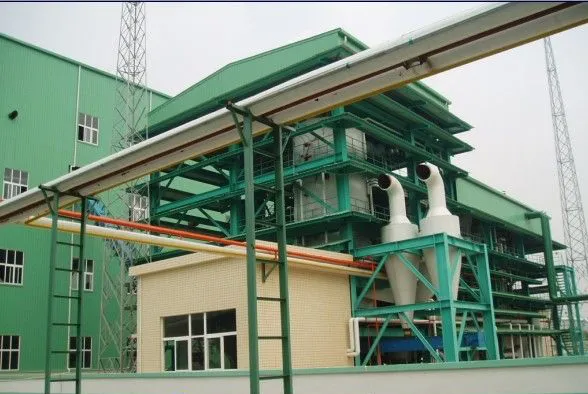
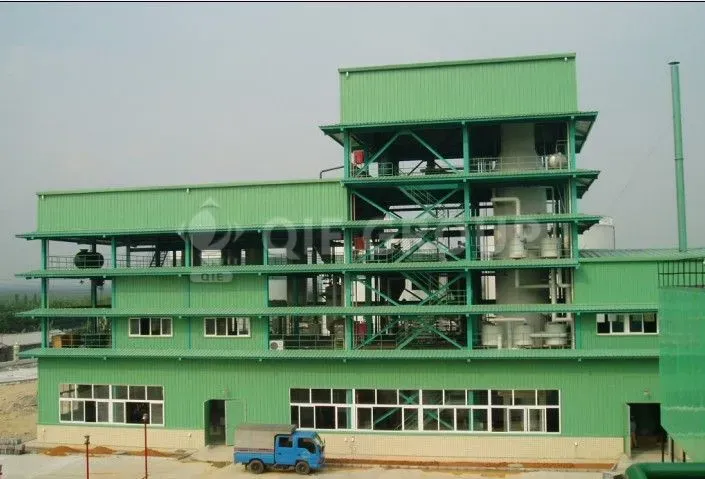
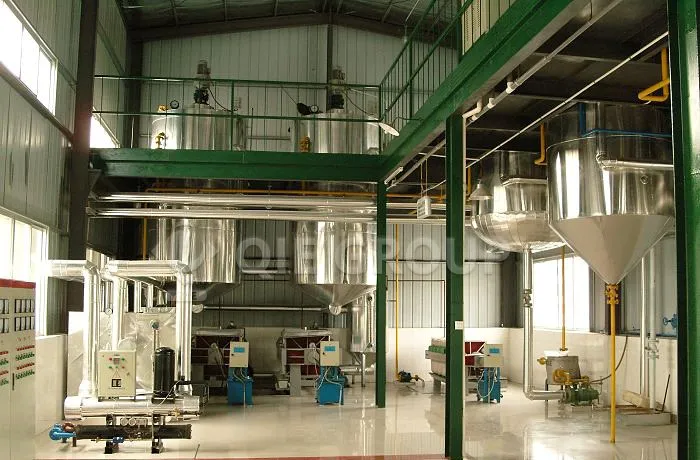
For soybean processing, for example, a large-scale project may require integrated pretreatment, solvent extraction, solvent recovery, and refining rather than a simple mechanical pressing line. A 300 TPD soybean project can therefore involve a complete processing system in which pretreatment, extraction, refining, utilities, storage, and automation are designed together.
1. Start With the Oilseed
The first decision when selecting an oil processing plant in Ethiopia is the raw material.
Different oilseeds have different oil contents, physical characteristics, moisture levels, and pretreatment requirements. These differences directly affect the process configuration and equipment selection.
A soybean processing line, for example, cannot simply use the same configuration as a peanut, sunflower, sesame, or cottonseed plant without adjustment.
Before requesting an equipment quotation, buyers should define:
- Oilseed type
- Expected daily raw material supply
- Typical moisture content
- Expected oil content
- Impurity level
- Whether dehulling is required
- Whether cracking, flaking, conditioning, or cooking is required
- Target oil recovery
- Whether the final product will be crude or refined oil
- How meal, cake, or other by-products will be handled
The process should therefore be designed around the actual raw material rather than around a predefined equipment list.
How Oilseed Selection Affects the Processing Line
The same production capacity does not necessarily require the same equipment configuration for every oilseed.
| Oilseed | Main consideration | Typical processing focus |
|---|---|---|
| Soybean | Relatively low oil content | Pretreatment and efficient oil recovery |
| Sunflower seed | Seed characteristics and hull content | Cleaning, dehulling where required, conditioning and pressing or extraction |
| Peanut | Relatively high oil content | Cleaning, preparation, pressing and oil clarification |
| Sesame | High-value oil and seed quality | Cleaning, preparation and pressing |
| Cottonseed | Seed structure and refining requirements | Pretreatment, oil recovery and appropriate refining |
These are general process considerations rather than fixed rules. The final configuration should be determined from the actual raw material analysis and production objective.
2. Define the Required Production Capacity
Production capacity should be established before selecting individual machines.
A common procurement mistake is to calculate the capacity of the entire plant from the rated capacity of the main oil press or extractor. In practice, the processing line must be balanced across all major sections.
A typical oil processing line may include:
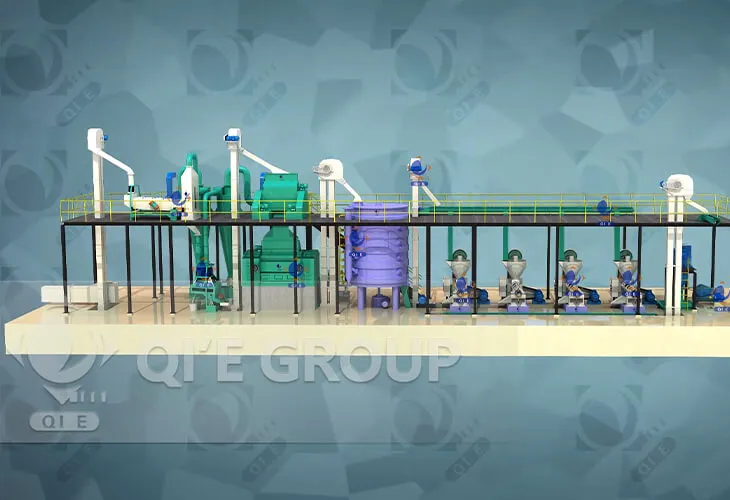
Raw Material Receiving → Cleaning → Pretreatment → Pressing or Extraction → Oil Clarification → Filtration → Refining → Finished Oil Storage
Depending on the process, the plant may also require meal or cake handling, solvent recovery, steam generation, water systems, storage tanks, automation, and other auxiliary facilities.
The practical throughput of the plant is determined by the relationship between these sections. If one section has insufficient capacity, it can become the process bottleneck even when the main processing machine has a higher nominal capacity.
Capacity Should Be Matched to the Project
The appropriate capacity depends on more than the desired daily oil output. Buyers should consider:
- Available raw material per day
- Seasonal raw material availability
- Expected operating hours
- Target annual production
- Oil content of the raw material
- Expected oil recovery
- Available storage
- Utility capacity
- Future expansion plans
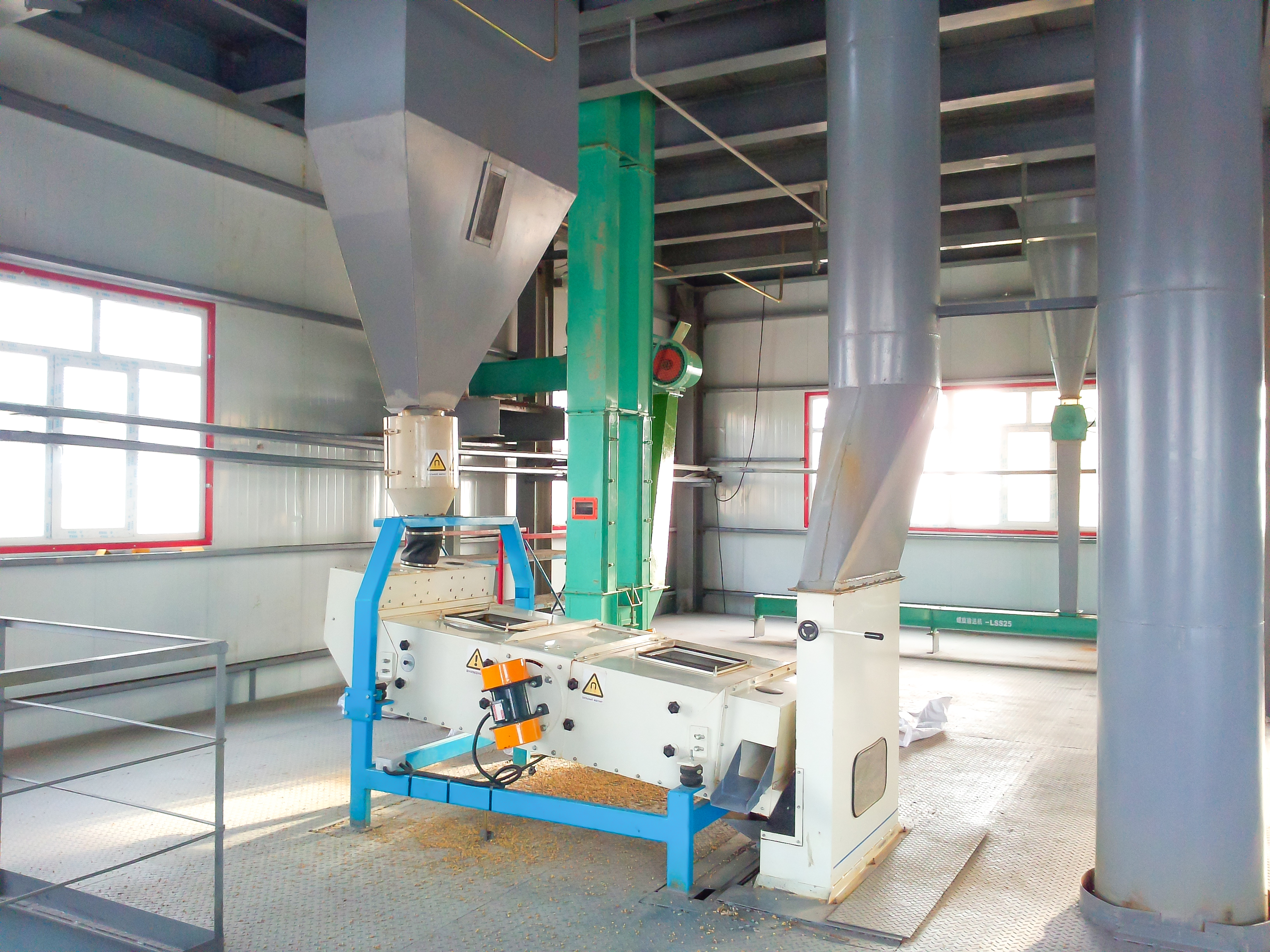
For example, a plant designed for 100 tons of raw material per day requires enough receiving, cleaning, pretreatment, processing, storage, and utility capacity to support that throughput. It is not enough to purchase a machine rated at 100 TPD if another part of the production line can only handle a lower throughput.
A Practical Capacity Comparison
| Project scale | Main consideration | Process approach |
|---|---|---|
| Small-scale | Lower investment and simpler operation | Mechanical pressing may be suitable |
| Medium-scale | Balance between investment and recovery | Pressing or pre-pressing may be considered |
| Large-scale | Higher throughput and oil recovery | Solvent extraction or pre-pressing plus extraction may be considered |
| Very large-scale | Integrated production and process control | Pretreatment, extraction, refining and auxiliary systems may be integrated |
These ranges should not be treated as fixed technical rules. The appropriate process depends on the oilseed, residual oil target, investment conditions, utilities, and final product requirements.
3. Decide Whether You Need Crude or Refined Oil
The required final product should be defined before selecting the downstream processing equipment.
A plant producing crude oil for further sale or processing will have a different configuration from a plant producing finished edible oil.
A typical edible oil refining system may include:
- Degumming
- Neutralization or physical deacidification
- Bleaching
- Deodorization
- Dewaxing when required
Not every oil requires the same refining sequence.
For this reason, buyers should define the target final oil specification before purchasing refining equipment. Important requirements may include:
- Free fatty acid level
- Phosphorus level
- Color
- Moisture and impurities
- Final product specification
- Intended market
This prevents unnecessary refining equipment from increasing the project cost while also avoiding an underspecified refinery that cannot achieve the required product quality.
Example: 300 TPD Soybean Processing
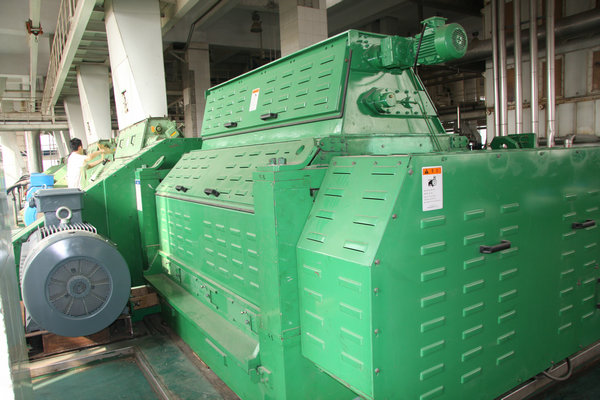
A 300 TPD soybean project illustrates why the complete process needs to be considered together. The configuration includes soybean pretreatment, a 300 TPD solvent extraction system, and a 30 TPD continuous refining system.
The project also requires supporting systems such as solvent recovery, steam, storage, and automated process control.
The important point is not the specific capacity itself, but the relationship between the different processing sections. A large soybean project cannot be evaluated simply by looking at the rated capacity of the extractor.
4. Match the Process to the Oil Recovery Target
After defining the raw material and capacity, the next decision is the oil recovery method.
The two main approaches are mechanical pressing and solvent extraction.
Mechanical Pressing
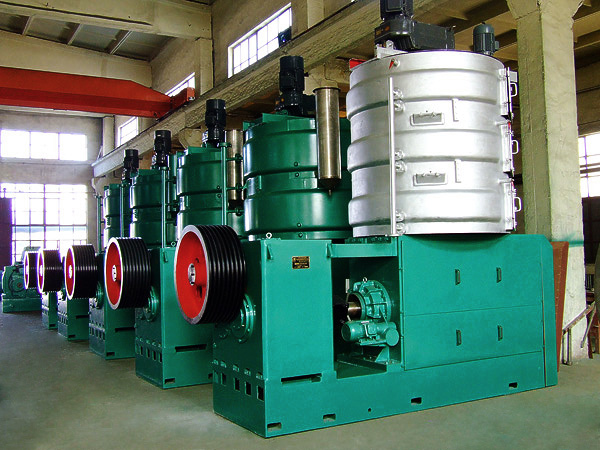
Mechanical pressing is generally a simpler processing route and may be suitable for small- and medium-scale plants or oilseeds with relatively high oil content.
A typical pressing line may include: Cleaning → Cracking → Flaking → Cooking/Conditioning → Screw Pressing → Clarification → Filtration → Storage
The main advantage is a comparatively straightforward process with fewer complex operating systems. However, some residual oil remains in the press cake. If the project places greater emphasis on maximizing oil recovery, pressing alone may not provide the desired result.
Solvent Extraction
Solvent extraction can be considered for larger-scale operations where oil recovery is an important part of the project objective.
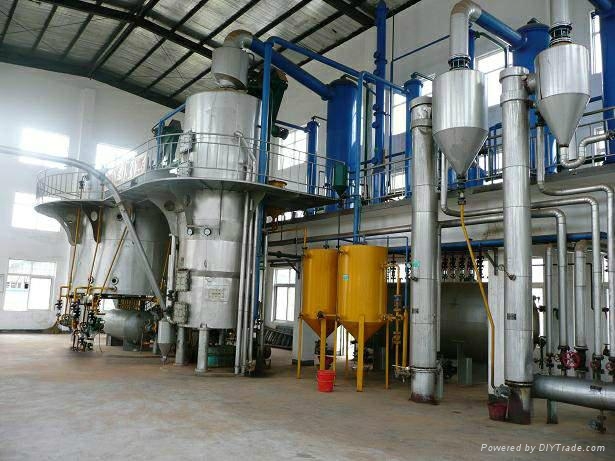
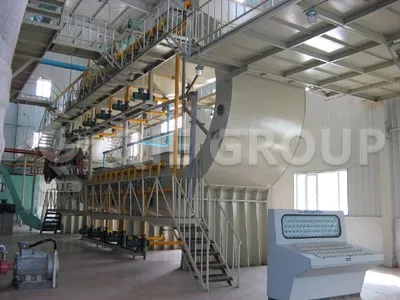
A typical extraction system may include: Pretreatment → Flaking → Extraction → Miscella Processing → Solvent Recovery → Desolventizing and Toasting → Oil Processing
Compared with mechanical pressing, solvent extraction requires additional process control, solvent recovery, safety systems, and utilities. Therefore, buyers should compare the complete process rather than comparing the price of an extractor alone.
How to Choose Between Pressing and Extraction
The decision should consider:
- Oilseed type
- Raw material oil content
- Processing capacity
- Target oil recovery
- Investment budget
- Energy and utility requirements
- Operating capability
- Safety requirements
- Final product requirements
- Value and handling of meal or press cake
The objective is not to select the most complex technology. It is to select the process that matches the project's actual production and recovery targets.
5. Consider By-Product Utilization
The economics of an oil processing plant should not be evaluated only from oil output.
Depending on the raw material and process, the plant may also produce soybean meal, oilseed cake, or other by-products. Their handling, storage, and potential market value should be considered during the initial process design.
For example, a soybean processing plant produces soybean meal alongside soybean oil. The plant therefore needs to consider both oil recovery and meal handling when evaluating the overall production system.
This can affect:
- Storage requirements
- Material handling equipment
- Product flow
- Plant layout
- Revenue potential
- Overall project economics
The value of these by-products should be assessed using actual local market conditions rather than assumed selling prices.
6. What Buyers Should Prepare Before Requesting a Quotation
Before contacting an oil processing plant supplier in Ethiopia, buyers should prepare basic project information. A clear technical requirement allows suppliers to develop a more accurate process configuration and makes quotations easier to compare.
At minimum, provide:
- Oilseed type
- Available raw material quantity
- Target processing capacity
- Raw material oil content
- Typical moisture and impurity level
- Required oil recovery
- Crude or refined oil requirement
- Target final oil quality
- Expected operating hours
- Available electricity and other utilities
- Available plant or land conditions
- Storage requirements
- Expected future expansion
- Required level of automation
The more clearly these requirements are defined, the less likely it is that different suppliers will quote substantially different process scopes for what appears to be the same project.
For example, two suppliers may both quote a "300 TPD soybean processing line," while one quotation includes pretreatment, extraction, solvent recovery, refining, storage, and automation and the other covers only part of the processing system. This is why capacity should always be evaluated together with the complete equipment scope.
7. The Basic Selection Logic
Before comparing equipment prices, buyers can follow a simple decision sequence:
Oilseed → Raw Material Supply → Target Capacity → Crude or Refined Oil → Processing Method → Oil Recovery Target → Utilities → By-Product Handling → Future Expansion → Complete Process Configuration
Only after these factors are defined should equipment quotations be compared. The next stage is to evaluate the equipment system, project cost, energy consumption, automation, Ethiopia-specific procurement conditions, and supplier scope.
8. Evaluate Oil Processing Plant Equipment as a Complete System
When comparing oil processing plant equipment in Ethiopia, buyers should evaluate the complete process rather than individual machines. A high-capacity oil press cannot compensate for inadequate pretreatment, while an efficient extraction section cannot solve a downstream filtration, storage, or refining bottleneck.
For each major processing section, compare:
- Rated capacity
- Expected actual throughput
- Material of construction
- Power consumption
- Steam requirements
- Temperature and pressure control
- Automation level
- Instrumentation
- Maintenance requirements
- Spare-parts availability
- Upstream and downstream compatibility
- Safety requirements
The equipment scope should also clearly identify which systems are included in the quotation and which systems are supplied by the buyer.
Typical Equipment Scope
Depending on the selected process, the complete project may include:
Raw Material Handling
- Receiving system
- Cleaning equipment
- Destoner
- Cracker
- Dehulling equipment where required
- Flaker
- Cooker or conditioner
Oil Recovery
- Screw press
- Pre-pressing section
- Extractor
- Miscella processing
- Solvent recovery
- Desolventizing and toasting
Oil Processing
- Clarification
- Filtration
- Crude oil storage
- Refining
- Finished oil storage
Auxiliary Systems
- Steam generation
- Water system
- Cooling system
- Compressed air
- Electrical and control systems
- Solvent storage and recovery where applicable
- Meal or cake handling
- Material handling
Not every project requires all of these systems. The final equipment list should be based on the selected oilseed, capacity, process technology, and final product requirements.

9. Understand Oil Processing Plant Cost in Ethiopia
The oil processing plant cost in Ethiopia should be evaluated as a complete project investment rather than the price of the main processing machines.
A Useful Cost Comparison
| Cost Category | What to Check |
|---|---|
| Processing equipment | Pretreatment, pressing/extraction, refining and auxiliary systems |
| Installation | Mechanical and electrical installation |
| Utilities | Steam, electricity, water, fuel and compressed air |
| Civil works | Foundations, buildings and storage areas |
| Automation | PLC, sensors, control system and instrumentation |
| Storage | Raw material, crude oil, finished oil and by-product storage |
| Logistics | Equipment transportation and handling |
| Spare parts | Initial spare parts and critical wear components |
| Maintenance | Routine servicing and replacement components |
| Future expansion | Additional equipment and utility requirements |
The equipment quotation alone therefore does not represent the total investment.
Two projects with similar processing capacities can have substantially different costs because their process configurations, refining requirements, storage systems, utilities, automation levels, and installation scopes are different.
What Determines the Cost?
The main cost drivers can be summarized as:
Raw Material → Capacity → Process Configuration → Oil Recovery Target → Refining Requirement → Automation → Utilities → Installation → Storage → Future Expansion
For example, a soybean plant using mechanical pressing will have a different investment structure from a large soybean solvent extraction plant.
Likewise, a plant producing crude oil only will require less downstream equipment than a plant producing finished edible oil.
For procurement, buyers should therefore request a complete process configuration and equipment scope before comparing quotations.
A lower equipment price does not necessarily mean a lower total project cost if additional equipment, utilities, installation work, or storage systems are excluded from the quotation.
10. Evaluate Energy Consumption and Operating Cost
Energy consumption is an important part of the long-term operating cost of an oil processing plant in Ethiopia.
Major energy-consuming sections may include:
- Seed conditioning
- Cooking
- Drying
- Oil pressing
- Solvent recovery
- Steam generation
- Refining
- Pumping
- Material handling
When comparing suppliers, request expected energy consumption for the complete process rather than looking only at installed motor power.
Installed Power Is Not the Same as Energy Consumption
Installed power ≠ actual energy consumption
A machine with a larger motor does not automatically result in higher production costs. Actual energy consumption depends on operating load, process conditions, production rate, heating requirements, and equipment efficiency.
More useful indicators include:
- Electricity consumption per ton of raw material
- Steam consumption per ton
- Fuel consumption where applicable
- Solvent loss or recovery performance
- Expected oil recovery
- Operating hours
These figures allow buyers to compare the expected operating performance of different process configurations.
For a soybean solvent extraction project, for example, solvent recovery performance can directly affect operating costs. A complete extraction system may therefore require solvent recovery, tail-gas condensation, and related equipment rather than an extractor alone.
11. Evaluate Automation and Process Control
Automation should be evaluated according to its role in the production process rather than simply being treated as an equipment feature.
A larger oil processing plant in Ethiopia may use PLC-based control systems to monitor and coordinate:
- Temperature
- Pressure
- Material flow
- Oil level
- Motor status
- Processing time
- Key process alarms
When comparing automation systems, buyers should ask:
- Which process parameters are automatically controlled?
- Which parameters are only monitored?
- How are abnormal conditions detected?
- Are production data recorded?
- Can operators identify process deviations quickly?
- Can upstream and downstream equipment be coordinated?
- What operator training is included?
- What happens if a sensor or control component fails?
- Are replacement components available?
Automation is most useful when it improves process stability, reduces unnecessary operator intervention, and helps operators identify problems before they become production bottlenecks.
The required automation level should therefore match the plant scale, process complexity, operator capability, and project budget.
12. Consider Ethiopia-Specific Procurement Conditions
Selecting an oil processing plant in Ethiopia requires more than choosing a suitable process. The engineering design should also consider conditions that may affect plant operation after installation.
Raw Material Availability
The plant should be matched to the oilseed that can be supplied consistently at the required volume and quality.
Seasonal variation in:
- Moisture
- Impurities
- Oil content
- Seed size
- Raw material quality
can affect pretreatment and oil recovery. Equipment should therefore provide sufficient process adjustment rather than being designed around one ideal laboratory specification.
Utilities
Before finalizing equipment, buyers should confirm the availability and reliability of:
- Electricity
- Steam or fuel
- Process water
- Cooling water
- Compressed air
Utility requirements should be included in the equipment specification because they affect both operating cost and plant layout.
For larger plants, utility systems should be considered during the initial engineering stage rather than added after the main equipment has already been selected.
Spare Parts and Maintenance
A technically suitable machine can still create operational problems if critical wear parts are difficult to replace.
The supplier quotation should identify:
- Recommended spare parts
- Initial spare-parts package
- Major wear components
- Maintenance intervals
- Lubrication requirements
- Technical support
- Operator training
Buyers should also clarify how technical support will be provided after commissioning.
Logistics and Installation
Imported processing equipment requires transportation, handling, installation, and commissioning.
When comparing quotations, clarify whether the quoted price includes:
- Equipment delivery
- Installation guidance
- Mechanical installation
- Electrical installation
- Commissioning
- Performance testing
- Operator training
A quotation covering equipment only should not be compared directly with a quotation covering a broader engineering and installation scope.
13. Plan the Plant Layout and Future Expansion
Plant layout should be considered before equipment is finalized.
The layout needs to provide practical space for:
- Raw material receiving
- Processing equipment
- Refining
- Storage tanks
- Utilities
- Finished oil handling
- Meal or cake storage
- Maintenance
- Truck access
- Material movement
- Future expansion
Material should move through the plant in a logical sequence from raw material receiving to finished product storage. Poor layout planning can increase material handling, complicate maintenance, and make future expansion more difficult.
Future Expansion
If raw material supply or production demand is expected to increase, the initial layout should allow practical expansion where possible.
Expansion planning can include:
- Reserved equipment space
- Larger utility capacity
- Additional storage
- Electrical capacity
- Material-handling capacity
- Additional processing modules
The purpose is not to oversize the initial plant. Instead, the objective is to avoid creating a layout that makes future expansion unnecessarily expensive.
14. What Should Buyers Request From an Oil Processing Plant Supplier?
Before comparing quotations for an oil processing line in Ethiopia, buyers should request comparable technical information from each supplier.
At minimum, the quotation package should include:
- Process flow diagram
- Complete equipment list
- Equipment specifications
- Guaranteed processing capacity
- Expected actual throughput
- Expected oil recovery
- Raw material requirements
- Electricity consumption
- Steam and fuel consumption
- Water and other utility requirements
- Automation and control scope
- Installation scope
- Commissioning scope
- Operator training
- Spare-parts list
- Equipment delivery scope
- Warranty conditions
- Future expansion provisions
This information makes supplier quotations easier to compare.
For example, two suppliers may both quote a nominal 300 TPD soybean extraction line, but their actual process scopes may differ substantially. One quotation may include: Pretreatment + Extraction + Solvent Recovery + Refining + Storage + Automation, while another may cover only: Extraction Equipment. These should not be treated as equivalent quotations simply because both mention “300 TPD.”
15. How to Compare Two Oil Processing Lines
When two suppliers offer different configurations, compare the technical scope before comparing the quotation total.
| Evaluation Factor | Supplier A | Supplier B |
|---|---|---|
| Raw material suitability | ||
| Designed capacity | ||
| Expected actual capacity | ||
| Oil recovery | ||
| Energy consumption | ||
| Steam consumption | ||
| Final oil quality | ||
| Equipment scope | ||
| Automation | ||
| Maintenance requirements | ||
| Spare parts | ||
| Installation scope | ||
| Commissioning | ||
| Warranty | ||
| Expansion capability | ||
| Initial investment | ||
| Expected operating cost |
The most important comparison is not necessarily which supplier has the lowest initial quotation. Instead, determine whether each configuration can achieve the required:
- Throughput
- Oil recovery
- Product quality
- Energy performance
- Operating stability
- Maintenance requirements
- Total project scope
A lower equipment price may not represent a lower total project cost if the line requires additional equipment, consumes more energy, or cannot reach the expected production capacity.
16. Common Mistakes When Choosing an Oil Processing Line
Choosing Equipment Only by Price
The lowest quotation does not necessarily represent the lowest total investment. A lower initial price may result from a narrower equipment scope, excluded utilities, limited installation support, or additional equipment that must be purchased later.
Ignoring Raw Material Variability
Oilseed moisture, impurities, oil content, and physical characteristics can change between batches. The process should therefore have sufficient adjustment capability to maintain stable operation under realistic raw material conditions.
Comparing Capacity Without Comparing Process Scope
A quoted capacity is meaningful only when the equipment scope is clear. A 300 TPD extraction line should not automatically be considered equivalent to a complete 300 TPD oil processing plant. Buyers need to determine whether pretreatment, extraction, solvent recovery, refining, storage, utilities, automation, installation, and commissioning are included.
17. Final Selection Checklist
Before selecting an oil processing line in Ethiopia, buyers should be able to answer the following questions:
- What oilseed will be processed?
- How much raw material is available?
- What is the target daily capacity?
- Will the plant produce crude or refined oil?
- What oil recovery level is required?
- Is mechanical pressing sufficient?
- Should solvent extraction be considered?
- What refining processes are required?
- How will meal or cake be handled?
- What utilities are available?
- What is included in the supplier's quotation?
- What are the expected energy and steam requirements?
- What installation and commissioning support is included?
- What spare parts and technical support are available?
- Is future expansion possible?
- What is the estimated total project investment?
- What is the expected operating cost?
If these questions have been clearly defined, suppliers can provide much more comparable technical proposals.
18. Engineering Recommendations
The best oil processing plant in Ethiopia is not necessarily the largest or the cheapest plant. It is the configuration that matches the raw material, production capacity, oil recovery target, final oil quality, available utilities, and total cost of ownership.
The selection process can be summarized as:
Raw Material → Capacity → Process → Oil Recovery → Refining → Utilities → Equipment Scope → Cost → Supplier Evaluation → Final Configuration
For buyers, the most important principles are:
- Design around the raw material, not around a standard equipment list.
- Balance the complete process, rather than selecting capacity from the largest machine.
- Compare oil recovery and operating cost, not only the initial quotation.
- Define the final oil specification before selecting refining equipment.
- Evaluate by-products as part of the overall project economics.
- Request a complete technical scope before comparing supplier prices.
- Clarify installation, commissioning, training, and warranty scope.
- Plan utilities and future expansion during the initial engineering stage.
A complete project evaluation should therefore combine technical performance, investment requirements, operating costs, and long-term expansion potential.






.jpg?x-oss-process=image/resize,h_800,m_lfit/format,webp)


