.png?x-oss-process=image/resize,h_100,m_lfit/format,webp)
.png?x-oss-process=image/resize,h_100,m_lfit/format,webp)
.png?x-oss-process=image/resize,h_100,m_lfit/format,webp)
When comparing an oil processing plant quotation, the first question should not be “Which supplier offers the lowest price?” It should be “Are the two quotations actually based on the same plant scope?”
A meaningful comparison requires the same raw material, processing capacity, process route, equipment boundary, utility scope, automation level, installation responsibility, and delivery terms.
This is particularly important for soybean processing projects because a quotation for a pressing line is fundamentally different from one covering pretreatment, solvent extraction, solvent recovery, meal desolventizing, and crude oil treatment.
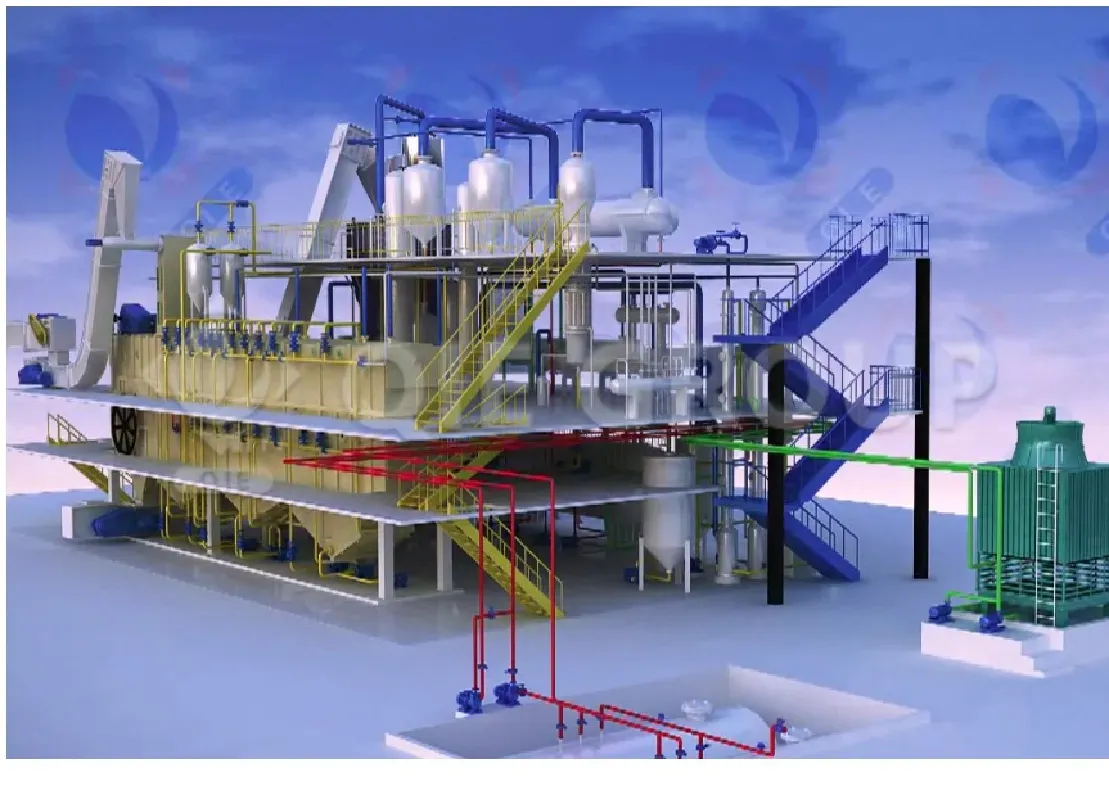
A real project example illustrates this difference. A soybean plant originally designed for 200 TPD included 200 TPD pretreatment and solvent extraction, a 50 TPD crude oil hydration system, DTDC, solvent recovery, and automatic control. After operation and technical optimization, its actual processing capacity reached 300–320 TPD.
This does not mean that every 200 TPD plant can automatically operate at 300–320 TPD. The example shows why buyers should understand the technical basis of a quotation before comparing its price with another supplier's offer.
Therefore, the correct oil plant quotation comparison should evaluate technical scope first and price second.
Step 1: Define Exactly What the Quotation Is Supposed to Cover
Before comparing suppliers, establish the project boundary.
An oil processing plant quotation should clearly state:
- Raw material
- Designed capacity
- Process route
- Main products
- Processing sections
- Utility systems
- Automation scope
- Installation and commissioning scope
- Delivery terms
- Exclusions
Without these items, two quotations can appear comparable simply because they use similar capacity figures.
Capacity Must Be Defined by Process Section
For example, the following are not equivalent:
- 200 TPD soybean pretreatment
- 200 TPD soybean solvent extraction
- 200 TPD crude oil refining
- 200 TPD finished edible oil production
They represent different process boundaries and equipment requirements.
The Russian soybean project provides a useful example. Its original design was based on 200 TPD soybean pretreatment and 200 TPD solvent extraction, while the project also included a separate 50 TPD crude oil hydration system.
If one supplier quoted only the 200 TPD pretreatment and extraction sections while another included the hydration system, their headline prices should not be compared directly.
Use a Common Technical Basis
Before requesting the final quotation, prepare a short project specification that every supplier must follow.
| Item | Required Information |
|---|---|
| Raw material | Soybean |
| Design capacity | e.g. 200 TPD |
| Process | Pretreatment + solvent extraction |
| Crude oil treatment | Required / not required |
| Meal treatment | DTDC required |
| Solvent recovery | Required |
| Automation | Defined control scope |
| Utilities | Boiler, electricity, cooling, etc. |
| Installation | Supplier scope / buyer scope |
| Commissioning | Included / excluded |
This becomes the reference point for every supplier.
Check What Is Excluded
A lower quotation may not necessarily represent a lower project cost. One supplier may exclude items that another supplier has already included.
Before comparing prices, check whether the quotation includes:
- Installation
- Civil works
- Boiler and steam system
- Electrical system
- Storage tanks
- Transportation
- Commissioning
- Spare parts
Two quotations with different exclusion lists should not be compared by headline price alone.
Step 2: Compare the Complete Process Scope
The next step is to compare the process sections rather than simply comparing machine names.
For soybean solvent extraction, a quotation may need to cover:
Raw soybean → Cleaning → Crushing → Conditioning → Flaking → Extrusion/Expansion → Solvent Extraction → Mixed Oil Evaporation → Wet Meal Desolventizing → Solvent Recovery → Crude Oil Treatment
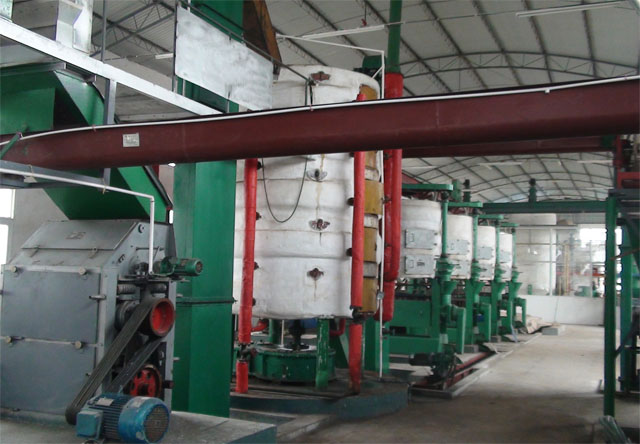
The actual Russian project included soybean cleaning, crushing, softening, flaking and expansion in pretreatment. The prepared material then entered continuous solvent extraction, followed by mixed-oil evaporation and wet meal DTDC desolventizing and drying.
This process boundary matters when comparing quotations.
Why Process Scope Changes the Quotation
A supplier that includes only:
Pretreatment + oil pressing
is not quoting the same system as a supplier providing:
Pretreatment + solvent extraction + DTDC + solvent recovery + crude oil hydration.
The second system contains additional process sections and supporting equipment, so a higher quotation does not automatically indicate worse commercial value.
Build a Process-Scope Comparison
| Process Section | Supplier A | Supplier B | What to Check |
|---|---|---|---|
| Cleaning | Included | Included | Capacity |
| Crushing | Included | Included | Machine specification |
| Softening | Included | Included | Heating and control |
| Flaking | Included | Included | Throughput |
| Expansion | Included | Optional | Process requirement |
| Solvent extraction | Included | Included | Extractor capacity |
| Mixed-oil evaporation | Included | Included | Evaporation configuration |
| DTDC | Included | Optional | Meal treatment scope |
| Solvent recovery | Included | Included | Recovery system |
| Crude oil hydration | Included | Excluded | Required capacity |
This is much more useful than comparing only the total number of machines.
The key principle is simple: before comparing the price of two oil processing plant quotations, make sure they describe the same production scope.
Step 3: Check Whether the Equipment Capacity Matches the Plant Capacity
A quotation may state “200 TPD” at the top of the document, but that does not prove that every major process section can continuously handle the same throughput.
Check the capacity of each major equipment group, including:
- Cleaner
- Crusher
- Conditioner
- Flaker
- Expander
- Extractor
- Evaporator
- DTDC
- Solvent recovery system
- Oil treatment system
- Conveyors and elevators
- Pumps
- Storage equipment
The equipment should be evaluated against the actual process flow rather than the nominal plant capacity alone.
A Practical Question to Ask Suppliers
Instead of asking:
“Is this a 200 TPD plant?”
ask:
“Which equipment and process sections are designed for 200 TPD, and under what raw-material and operating conditions?”
This produces a much more useful technical response.
Step 4: Look for the Difference Between Design Capacity and Operating Capacity
One useful lesson from the Russian soybean project is that design capacity and actual operating capacity are not always the same.
The plant was originally designed for 200 TPD, but after production began, technical optimization and equipment adjustments increased the actual processing capacity to approximately 300–320 TPD.
This does not mean that every 200 TPD plant can automatically operate at 300–320 TPD.
Instead, buyers should ask suppliers about:
- Design throughput
- Normal operating throughput
- Equipment bottlenecks
- Expected operating margin
- Raw-material conditions
- Future expansion possibilities
- Which sections would limit additional throughput
Do Not Treat Optimized Capacity as the Original Guarantee
When comparing quotations, distinguish between different types of capacity:
| Capacity Type | Meaning |
|---|---|
| Design capacity | Capacity used for the original engineering design |
| Guaranteed capacity | Capacity covered by agreed performance conditions |
| Normal operating capacity | Expected routine production rate |
| Optimized capacity | Capacity achieved after operational or technical adjustments |
For the case project, 200 TPD was the original design capacity, while 300–320 TPD was the later operating result after optimization.
A buyer should not assume that an existing project's optimized throughput can automatically be used as the guaranteed capacity of a new quotation.
Step 5: Compare Equipment Specifications, Not Equipment Names
After confirming process scope and capacity, compare the actual equipment specifications.
“Flaker included” tells the buyer very little.
The quotation should make it possible to identify:
- Equipment model
- Rated capacity
- Motor power
- Material of construction
- Quantity
- Operating conditions
- Control method
- Included accessories
- Spare parts
A practical oil processing plant quotation checklist can use the following format:
| Equipment | Specification to Compare |
|---|---|
| Cleaner | Capacity, cleaning method, motor power |
| Crusher | Throughput, roller/shaft configuration |
| Softener | Heating method, residence time, capacity |
| Flaker | Flake thickness, throughput, motor power |
| Expander | Throughput, motor power, steam requirement |
| Extractor | Processing capacity, extraction configuration |
| Evaporator | Evaporation capacity and stages |
| DTDC | Meal throughput and drying/cooling configuration |
| Solvent recovery | Recovery capacity and operating conditions |
| Oil hydration | Capacity and treatment configuration |
| Control system | PLC, instruments and automation scope |
This is where many quotation comparisons fail. Two suppliers may use the same equipment name while offering different technical specifications.
The goal is not to find the quotation with the longest equipment list. It is to determine whether the equipment specifications are sufficient for the required process and capacity.
Step 6: Check Utility Requirements and Auxiliary Systems
The main production machines are only one part of an oil processing plant. Supporting systems can also affect both the quotation price and the long-term operating cost.
For a soybean solvent extraction project, check whether the quotation includes the required:
Material Handling
- Raw-material conveyors
- Elevators
- Intermediate bins
- Product conveyors
- Meal handling systems
Solvent-Related Systems
- Solvent storage
- Solvent circulation
- Condensation
- Solvent recovery
- Associated pumps and piping
Steam and Thermal Systems
- Boiler
- Steam distribution
- Heating equipment
- Condensate handling
Electrical and Automation
- Control cabinet
- PLC/HMI
- Motors
- Sensors
- Cables
- Field instruments
The Russian project specifically included wet meal DTDC, solvent recovery and an automatic control system as part of the overall project scope.
Compare Utility Consumption, Not Only Equipment Price
The quotation should also identify major utility requirements where applicable, such as:
- Steam
- Electricity
- Cooling water
- Fuel
- Process water
A lower equipment price does not necessarily mean a lower operating cost. If two quotations have similar process scopes but significantly different utility requirements, this difference should be considered before making the final purchasing decision.
Therefore, compare both what the supplier provides and what the plant is expected to consume.
Step 7: Check Whether the Quotation Includes the Same Product Scope
A quotation can also differ because the final product scope is different.
For a soybean processing project, clarify whether the quotation is designed to produce:
- Crude oil
- Hydrated crude oil
- Fully refined oil
- Soybean meal
- More than one product
The Russian project produces hydrated crude soybean oil and high-protein soybean meal. Its 50 TPD hydration system uses water treatment to remove phospholipids and other impurities from crude oil before further refining.
The product requirement directly affects the equipment configuration.
For example, if a buyer requires treated crude oil for subsequent refining, a quotation that stops after solvent extraction and oil evaporation may not represent the same production objective as one that includes crude oil hydration.
Therefore, compare the final product requirements before comparing the total quotation price.
Step 8: Check Performance Guarantees and Commercial Terms
After confirming the process, capacity and equipment scope, check what the supplier actually guarantees.
A quotation should make clear, where applicable:
- Processing capacity
- Oil yield or residual oil level
- Product quality
- Major utility requirements
- Raw-material conditions used for the guarantee
A capacity guarantee should also specify the conditions under which it applies. For example, the guaranteed throughput of a plant depends on raw-material characteristics, operating conditions and the configuration of the process sections.
This is particularly important when a supplier refers to a higher capacity achieved by an existing project. The 300–320 TPD operating result from the Russian soybean project should be treated as a project-specific result after optimization, not as a general performance guarantee for every 200 TPD plant.
Compare the Commercial Scope
Technical specifications are only one part of the quotation. Also check whether both suppliers are offering comparable commercial terms.
Important items include:
- Installation and commissioning
- Delivery terms
- Payment terms
- Warranty
- Spare parts
- After-sales support
- Exclusions
For example, a quotation for equipment supplied on an equipment-only basis should not be directly compared with a quotation that includes installation and commissioning.
The same principle applies to delivery terms. The stated equipment price should be evaluated together with what the buyer is responsible for after the equipment leaves the supplier's facility.
Final Oil Processing Plant Quotation Checklist
Before selecting a supplier, compare the quotations using the same technical and commercial basis:
| Category | What to Check |
|---|---|
| Raw material | Material type and conditions |
| Capacity | Design and guaranteed capacity |
| Process scope | Complete process sections |
| Equipment | Model, capacity and specifications |
| Utilities | Steam, electricity, water and fuel requirements |
| Product scope | Crude oil, treated oil, meal, etc. |
| Installation | Included or excluded |
| Commissioning | Included or excluded |
| Performance | Guarantee conditions |
| Delivery | Delivery terms and responsibilities |
| Payment | Payment schedule |
| Warranty | Warranty period and scope |
| Spare parts | Included quantity and availability |
| Exclusions | Items not included in the quotation |
| After-sales | Technical and service support |
The purpose of this checklist is not to make the quotation comparison more complicated. It is to make sure that the prices being compared represent similar technical and commercial scopes.
Conclusion
The lowest oil processing plant quotation is not necessarily the lowest-cost solution.
Before comparing prices, first confirm that the quotations have the same raw material, capacity, process scope, equipment requirements, utility conditions and commercial responsibilities. Then evaluate performance guarantees, exclusions, delivery terms and long-term support.
The basic principle is simple:
First determine whether the quotation can deliver the required plant; then determine whether the price is commercially acceptable.
Frequently Asked Questions
What should be included in an oil processing plant quotation?
A quotation should clearly define the raw material, processing capacity, process route, equipment scope, utility requirements, installation and commissioning responsibilities, delivery terms, exclusions, warranty and performance conditions.
Why can two oil processing plant quotations have very different prices?
The difference may come from different process scopes, equipment specifications, auxiliary systems, automation levels, installation responsibilities or excluded items. Therefore, the total price should only be compared after the two quotations have been normalized to the same technical scope.
Should I choose the lowest oil processing plant quotation?
Not necessarily. A lower quotation may exclude important equipment or services, or may have higher utility requirements. Buyers should first confirm technical compliance and total project scope, then compare the commercial value.
How can I compare quotations from different oil processing plant suppliers?
Use the same project specification for every supplier and compare capacity, process scope, equipment specifications, utilities, product requirements, guarantees, exclusions, delivery terms, installation, warranty and after-sales support on the same basis.
Key Takeaway
When comparing oil processing plant quotations, do not start with the price.
First make sure the quotations describe the same plant scope, capacity, process and technical requirements. Then check utility requirements, exclusions, performance guarantees and commercial terms.
A quotation with a higher initial price can provide better value if it includes more complete equipment, clearer performance conditions and fewer additional costs.
The best comparison is therefore not:
Which supplier has the lowest price?
It is:
Which quotation provides the required processing capacity and production scope with clear technical, commercial and performance conditions?






.jpg?x-oss-process=image/resize,h_800,m_lfit/format,webp)