.png?x-oss-process=image/resize,h_100,m_lfit/format,webp)
.png?x-oss-process=image/resize,h_100,m_lfit/format,webp)
.png?x-oss-process=image/resize,h_100,m_lfit/format,webp)
Where Do Oil Processing Losses Occur in an Oil Processing Plant?
Oil processing losses should be evaluated according to the complete material flow rather than by looking only at the main extraction machine.
A practical assessment follows:
At each stage, the plant should compare the expected oil available with the actual oil recovered.
1. Raw Material Preparation Losses
Oil can be lost before extraction begins if oil-bearing material is unnecessarily removed with cleaning waste, husks, fines, or other rejected material.
Cleaning, dehulling, cracking, flaking, cooking, and drying also affect the condition of the material entering the extraction section. Poor preparation can make oil release less efficient and increase the amount of recoverable oil remaining in the cake or meal.
The main checks include:
- Oil-bearing material discharged with cleaning or dehulling waste
- Excessive fines generated during preparation
- Inconsistent particle size or flake thickness
- Incorrect moisture before pressing or extraction
- Insufficient conditioning
- Unstable feed conditions
The objective is not to eliminate all process residues. Some separation is necessary. The objective is to prevent recoverable oil from leaving the useful process stream unnecessarily.
For soybean processing, FAO technical guidance notes that excessive flake disintegration can increase fine solids in crude oil and affect oil recovery. This illustrates why pretreatment should be considered part of the overall oil-loss control system rather than treated as a separate preparation step.
2. Oil Extraction Losses
The extraction section is often one of the most important points for controlling oil processing losses, because a measurable amount of oil can remain in press cake or meal after extraction.
In mechanical pressing, extraction performance depends on several factors working together:
Increasing pressure alone does not necessarily reduce losses. Excessive pressure can increase power consumption, temperature, mechanical wear, or fines without producing a proportional improvement in oil recovery.
FAO technical guidance for soybean processing indicates that screw pressing can leave approximately 3–5% residual oil in press cake under the application described. The acceptable level depends on the raw material, extraction technology, and process configuration, so this figure should not be treated as a universal target.
The first question should therefore be:
How much recoverable oil is leaving the plant in the cake or meal?
Useful measurements include:
- Oil content of incoming raw material
- Oil content of press feed
- Moisture and temperature of press feed
- Residual oil in press cake or meal
- Actual crude-oil recovery
- Oil content of other major outgoing streams
If residual oil in cake is higher than expected, the cause should be investigated before replacing the press.
Possible causes include:
- Poor raw material preparation
- Incorrect moisture
- Inadequate conditioning
- Excessive feed rate
- Incorrect press adjustment
- Worn screw or cage components
- Unstable material feeding
This is important when evaluating equipment procurement. A new press does not automatically solve an extraction loss caused by upstream preparation or incorrect operating conditions.
How to Measure Oil Processing Losses Before Making Changes
The first step in oil processing loss control is to establish a basic oil balance.
For a simplified extraction section:
This balance helps identify whether the largest recoverable loss occurs during extraction, separation, refining, or material handling.
For example, if the oil content of press cake is unusually high, the investigation should focus first on pretreatment and extraction conditions. If the cake is within the expected range but large amounts of oil are present in sludge or separated solids, the separation system deserves greater attention.
A practical loss assessment should compare the following:
| Loss-control point | What to measure | What it indicates |
|---|---|---|
| Raw material | Oil content | Potential oil available |
| Pretreatment | Oil-bearing material in waste | Preparation loss |
| Press feed | Moisture, temperature, feed rate | Extraction conditions |
| Press cake/meal | Residual oil | Extraction loss |
| Crude oil | Oil and solids | Separation performance |
| Sludge/solids | Oil content | Recoverable separation loss |
| Finished oil | Oil recovery and output | Overall process result |
The key principle is:
Measure the oil content of outgoing streams, not only the weight of the waste.
A small quantity of waste can represent a significant economic loss if its oil concentration is high.
How to Calculate Recoverable Oil Loss
A simple calculation can help identify which outgoing stream deserves attention first:
For a complete plant assessment, this should be combined with the incoming raw material oil content and actual oil recovery.
The purpose is not to create a theoretical number that looks precise. It is to identify the largest recoverable oil loss and determine whether the solution is process adjustment, maintenance, equipment modification, or a larger process upgrade.
How to Reduce Oil Processing Losses at the Main Process Points
Once the largest loss has been identified, optimization should focus on that specific process point.
Optimize Raw Material Preparation
Consistent feed material gives the extraction equipment a more stable operating condition.
For pressing plants, important variables include:
- Moisture
- Particle size or flake quality
- Conditioning temperature
- Conditioning time
- Feed uniformity
- Material loss through cleaners and dehullers
The preparation section should also be matched to the required plant capacity. An undersized cleaner, flaker, cooker, or conveyor can create an unstable feed condition that later affects extraction performance.

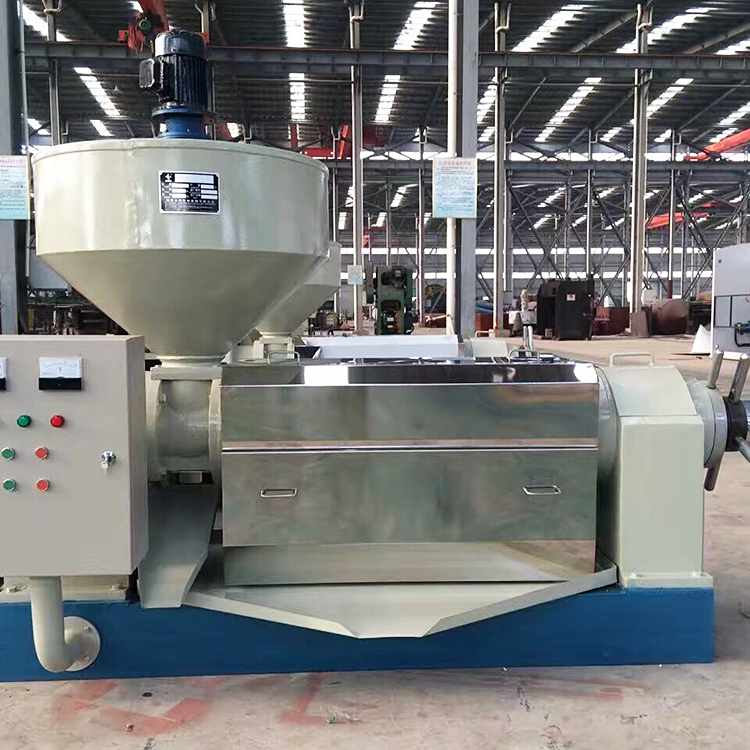
Optimize Screw Press Operation
For mechanical extraction, the relationship between feed condition and press performance should be monitored rather than adjusting pressure in isolation.
A useful operating sequence is:
If residual oil increases, determine whether the change is related to feed preparation, moisture, throughput, press settings, or equipment wear.
Worn screw components, cages, and other critical parts can gradually change the compression profile and reduce extraction efficiency. Routine inspection can therefore be more appropriate than immediate equipment replacement.

Control Feed Rate
Overfeeding can increase oil processing losses even when the machine continues operating.
When a press or extractor is pushed beyond its stable operating range, material distribution and residence time can change. Extraction efficiency may then decline while hourly throughput appears higher.
Therefore:
A plant should evaluate whether pretreatment, extraction, clarification, filtration, refining, conveying, and storage systems can operate together at the required throughput.
The objective is not maximum throughput alone.
The objective is maximum recoverable oil at stable operating conditions.
How to Control Oil Losses During Clarification and Separation
Not all oil processing losses occur during extraction. After pressing or solvent extraction, recoverable oil can still leave the useful production stream with sludge, suspended solids, spent material, or other separated streams.
This makes clarification and separation an important part of overall oil recovery.
The main indicators to check are:
- Oil content in discharged solids
- Oil content in sludge
- Solid content in crude oil
- Filtration performance
- Settling or centrifugation efficiency
- Oil recovered from secondary streams
If extraction performance is already stable but overall oil recovery remains below the expected level, the separation section should be investigated before changing the extraction equipment.

Identify Oil Carryover in Solid Streams
Oil carried out with solids represents a direct recovery loss.
For example, crude oil containing excessive fine particles can make downstream separation more difficult. If these solids leave the process carrying significant amounts of oil, the plant loses recoverable oil even though the extraction machine itself may be operating normally.
The assessment should therefore focus on both:
Measuring only the weight of sludge or solids does not show the actual economic loss.
Review Clarification and Filtration Performance
Clarification and filtration should remove unwanted solids while retaining as much recoverable oil as practical.
Poor separation may result from:
- Excessive solids entering the separation section
- Inadequate settling
- Incorrect operating conditions
- Insufficient separation capacity
- Poor filtration performance
- Unstable material flow
If the separation system is undersized relative to the extraction section, increasing extraction capacity can increase downstream oil losses rather than improve overall recovery.

How to Control Oil Losses During Refining
Refining removes impurities from crude oil, but some oil can leave the useful product stream together with separated materials.
The main refining stages may include:
Depending on the process, oil can be carried away with:
- Gums
- Soapstock
- Spent bleaching earth
- Filter residues
- Other separated materials
The objective is therefore not simply to remove impurities. It is to achieve the required product quality while keeping oil processing losses within an acceptable range.
Operators should monitor the quantity and oil content of major refining by-products.
For example, unusually high oil content in soapstock or spent bleaching earth may indicate a problem with process conditions, separation efficiency, filtration, or equipment operation.
This is why refined-oil output alone is not sufficient for evaluating refining performance.
A better assessment compares:

Why Increasing Plant Capacity Can Increase Oil Processing Losses
Increasing production capacity does not automatically reduce losses.
In some situations, increasing feed rate can actually increase oil processing losses because different sections of the plant no longer operate within their stable processing range.
For example, if the extraction section is upgraded but clarification or filtration capacity remains unchanged, the additional material may overload the downstream separation system.
The plant may then achieve:
instead of:
This distinction is important when evaluating an oil processing plant upgrade.
A capacity review should consider the complete processing chain:
- Pretreatment
- Extraction
- Clarification
- Filtration
- Refining
- Conveying
- Storage
The weakest section can determine the actual efficient capacity of the entire line.
Rated Capacity vs. Efficient Capacity
Equipment specifications normally provide a rated processing capacity. However, the capacity at which equipment can operate while maintaining stable oil recovery may be lower.
Therefore, procurement decisions should distinguish between:
A plant designed around the rated capacity of only the main press or extractor can develop bottlenecks elsewhere in the process.
For a new plant, capacity should be balanced during process design.
For an existing plant, the first step should be to identify which section limits oil recovery before increasing the feed rate.
How to Decide Whether Process Optimization or Equipment Upgrading Is Needed
Equipment replacement should follow measured diagnosis.
A practical decision sequence is:
This prevents unnecessary capital expenditure.
When Process Adjustment Is Enough
Process optimization may be sufficient when:
- Existing equipment is correctly sized
- Mechanical components remain in good condition
- Losses change significantly with operating conditions
- Feed preparation is inconsistent
- Operators are working outside the recommended operating range
- Separation conditions are not properly controlled
In these cases, changing equipment may not address the actual cause.
For example, if residual oil in press cake increases because of incorrect feed moisture, replacing the press without correcting the feed condition may produce little improvement.
When Equipment Upgrading Should Be Considered
An equipment upgrade becomes more reasonable when losses remain high after process conditions have been optimized.
Typical indicators include:
- Residual oil in cake or meal remains above the process target
- Extraction equipment cannot maintain stable performance at the required throughput
- Separation equipment causes excessive oil carryover
- Critical components are worn beyond economical repair
- Existing equipment is undersized
- Upstream and downstream capacities are poorly matched
- The current process configuration structurally limits oil recovery
The upgrade should target the specific source of loss.
For example:
| Observed loss | First engineering focus |
|---|---|
| High residual oil in cake | Pretreatment and extraction |
| High oil content in sludge | Clarification and recovery |
| High oil content in separated solids | Solid-liquid separation |
| Excessive refining loss | Refining conditions and by-product separation |
| Loss increases with higher throughput | Complete process capacity balance |
This approach is more useful than replacing the entire production line simply because the plant is experiencing high losses.
How to Verify Whether Oil Processing Losses Have Been Reduced
An optimization should be verified using measured operating data before and after the change.
The comparison should be made under reasonably similar raw material and operating conditions.
At minimum, record:
| Indicator | Before optimization | After optimization |
|---|---|---|
| Raw material throughput | Actual value | Actual value |
| Raw material oil content | Laboratory value | Laboratory value |
| Residual oil in cake/meal | Laboratory value | Laboratory value |
| Crude oil recovered | Actual value | Actual value |
| Oil in major waste streams | Laboratory value | Laboratory value |
| Refined oil output | Actual value | Actual value |
| Energy consumption | Actual value | Actual value |
The most important comparison is not simply whether waste volume has decreased.
The key question is:
Has the amount of recoverable oil leaving the useful production stream decreased?
Use Oil Content Instead of Waste Weight Alone
Waste weight can be misleading.
A small quantity of waste with high residual oil may represent a greater economic loss than a larger quantity of low-oil waste.
For this reason:
This calculation can help rank different loss streams according to their recovery potential.
For an operating plant, measurements should be collected over a representative period rather than relying on one production shift. Raw material oil content, moisture, throughput, and operating conditions can vary and affect the result.
A Practical Oil Processing Loss Control Checklist
The following checklist can be used when diagnosing an existing plant:
| Problem observed | First factor to check | Possible action |
|---|---|---|
| High residual oil in cake | Feed condition and extraction operation | Optimize preparation and extraction |
| Unstable oil recovery | Feed rate and material condition | Stabilize feeding and conditioning |
| High oil in sludge | Separation efficiency | Improve clarification or oil recovery |
| High oil in separated solids | Solid-liquid separation | Review separation performance |
| Excessive refining loss | Refining conditions and by-products | Optimize refining parameters |
| Loss increases after capacity expansion | Process balance | Match upstream and downstream capacity |
| Loss remains high after optimization | Equipment capability | Evaluate modification or upgrade |
The purpose of this checklist is to connect an observed loss with the most likely engineering investigation.
It should not be used as a substitute for laboratory analysis or a complete process audit.
What Data Should Be Prepared Before an Equipment Upgrade?
Before requesting a new press, extractor, separation system, or complete processing line, the buyer should prepare enough operating data for the equipment supplier or process engineer to identify the actual bottleneck.
The most useful information includes:
- Oil-bearing raw material type
- Raw material oil content
- Required processing capacity
- Current actual throughput
- Existing extraction method
- Current equipment capacity
- Residual oil in cake or meal
- Oil content of sludge and major solid streams
- Current crude-oil recovery
- Current refined-oil output
- Target production capacity
- Target oil recovery
- Existing process configuration
This information helps determine whether the requirement is for:
rather than automatically specifying a completely new production line.
For procurement teams, this distinction can significantly improve the technical quality of an equipment inquiry.
A Decision Framework for Reducing Oil Processing Losses
A practical approach can be summarized as follows:
- Detect the loss
Measure oil content in the main outgoing streams.
- Locate the loss
Determine whether the largest recoverable loss occurs in pretreatment, extraction, separation, refining, or material handling.
- Check operating conditions
Review moisture, temperature, feed rate, pressure, conditioning, and other relevant parameters.
- Inspect equipment
Check wear, capacity, operating condition, and process compatibility.
- Optimize
Correct the identified process problem before making a major capital investment.
- Re-measure
Compare oil recovery and oil content in outgoing streams before and after optimization.
- Upgrade if necessary
If the required recovery or capacity cannot be achieved with the existing configuration, evaluate equipment modification or process upgrading.
This sequence provides a more reliable basis for decisions than judging equipment performance from production volume alone.
Key Takeaways
- Oil processing losses can occur during pretreatment, extraction, separation, refining, and material handling.
- The largest recoverable loss should be identified through oil-content measurements and material-balance data.
- To reduce oil processing losses, process conditions should be optimized before replacing equipment.
- To reduce oil production losses, plants should monitor oil leaving through cake, meal, sludge, solids, and refining by-products.
- Increasing throughput can increase losses if upstream and downstream equipment are not properly balanced.
- Equipment upgrades should target the specific source of loss rather than simply increasing machine capacity.
- Before purchasing new equipment, buyers should provide raw material, capacity, recovery, residual-oil, and existing-equipment data.
- Effective oil processing loss control depends on measurement, diagnosis, optimization, and verification.
Frequently Asked Questions About Oil Processing Losses
1. What Are the Main Causes of Oil Processing Losses?
The main causes include incomplete oil extraction, high residual oil in press cake or meal, oil carried away with sludge or solid streams, refining losses, material leakage, unstable feeding, and poor coordination between processing sections.
The first step is to determine which outgoing stream contains the largest amount of recoverable oil.
2. How Can an Oil Processing Plant Reduce Oil Losses During Extraction?
Start by checking raw material preparation, moisture, conditioning, feed rate, extraction conditions, and equipment condition.
For mechanical pressing, residual oil in press cake is an important indicator of extraction performance.
If residual oil remains high after process optimization, the plant should then evaluate whether the press capacity, configuration, or mechanical condition is limiting recovery.
3. Can Increasing Plant Capacity Reduce Oil Processing Losses?
Not necessarily.
Increasing throughput can increase oil processing losses if the extraction, clarification, filtration, or refining sections cannot handle the additional material efficiently.
Capacity should therefore be evaluated across the complete processing line rather than according to the rated capacity of only one machine.
4. When Should Equipment Be Replaced to Reduce Oil Production Losses?
Equipment replacement should be considered when process optimization and maintenance cannot bring oil losses within the required operating target.
Typical indicators include:
- Persistently high residual oil in cake or meal
- Excessive oil carryover in separated solids
- Unstable performance at the required throughput
- Significant equipment wear
- Insufficient equipment capacity
- A process configuration that structurally limits oil recovery
The replacement should target the identified source of loss.
5. How Can a Plant Measure Whether Loss-Reduction Measures Are Effective?
Compare oil recovery before and after the improvement under reasonably similar operating conditions.
Useful measurements include:
- Raw material oil content
- Processing throughput
- Residual oil in cake or meal
- Oil content in sludge and major waste streams
- Crude-oil recovery
- Refined-oil output
- Energy consumption
The most important indicator is whether recoverable oil leaving the useful production stream has decreased.
6. Is Higher Throughput Always Better for an Oil Processing Plant?
No.
Higher throughput is only beneficial when the complete production system can maintain stable oil recovery.
A plant should evaluate:
rather than throughput alone.
If additional feed increases the amount of recoverable oil lost in cake, sludge, or refining by-products, the higher throughput may not represent a real improvement in plant performance.
7. What Information Should Buyers Provide When Requesting an Oil Processing Equipment Proposal?
For an accurate technical assessment, buyers should provide:
- Raw material type
- Raw material oil content
- Required capacity
- Current actual throughput
- Existing extraction method
- Existing equipment configuration
- Residual oil in cake or meal
- Oil content of major waste streams
- Current oil recovery
- Target production capacity
- Target oil recovery
This information allows the equipment supplier or process engineer to determine whether the project requires process optimization, equipment modification, additional recovery equipment, or a larger process upgrade.
Final Engineering Perspective
Oil processing losses should be treated as a measurable process-engineering problem rather than simply an equipment-performance problem.
The most practical approach is to:
- Measure oil losses in the major outgoing streams.
- Identify the largest recoverable loss.
- Check the process conditions responsible for that loss.
- Inspect equipment condition and capacity.
- Optimize the existing process where possible.
- Measure oil recovery again after the adjustment.
- Upgrade equipment only when the existing configuration cannot meet the required recovery or capacity.
For a new oil processing plant, this approach should be incorporated into process design from the beginning. Pretreatment, extraction, separation, refining, and material-handling capacities should be designed as an integrated system.
For an existing plant, the same method helps determine whether the most appropriate solution is process adjustment, equipment modification, capacity balancing, or process upgrading.
The key principle remains:
Measure the loss before choosing the solution.
This provides a more reliable basis for controlling oil processing losses, reducing unnecessary capital expenditure, and improving recoverable oil output.