.png?x-oss-process=image/resize,h_100,m_lfit/format,webp)
.png?x-oss-process=image/resize,h_100,m_lfit/format,webp)
.png?x-oss-process=image/resize,h_100,m_lfit/format,webp)
For a commercial plant, oil extraction efficiency should therefore be evaluated across the complete process rather than by one machine. Key indicators include residual oil in meal or press cake, actual throughput, oil recovery, energy consumption, solvent consumption where applicable, and final oil quality.
The practical objective is to match the raw material, pretreatment, extraction method, equipment capacity, and operating conditions so that the entire system reaches a stable balance between oil recovery, throughput, energy use, and product quality.
What Are the Main Factors Affecting Oil Extraction Efficiency?
The main factors affecting oil extraction efficiency can be grouped into six areas:
| Factor | Why It Matters |
|---|---|
| Raw material condition | Determines how easily oil can be released |
| Moisture and temperature | Affect seed structure, viscosity, and extraction conditions |
| Pretreatment quality | Controls particle size, flake quality, and material uniformity |
| Extraction technology | Determines the basic oil recovery route |
| Operating parameters | Influence throughput, residence time, and residual oil |
| Oil and solvent recovery | Determines how much of the extracted oil is ultimately recovered |
These factors are interconnected. Poor pretreatment, for example, can result in unstable pressing or extraction even when the extraction equipment itself is correctly sized.
For this reason, evaluating an oil processing plant should start with the process chain, not with the rated capacity of an individual machine.
How Does Raw Material Affect Oil Extraction Efficiency?
The condition of the raw material is the starting point for extraction performance. Different oilseeds have different oil contents, physical structures, moisture requirements, and processing characteristics. Therefore, the same process settings cannot necessarily be applied to every feedstock.
Important raw material specifications include:
- Oil content
- Moisture content
- Seed cleanliness
- Impurity level
- Seed size and uniformity
- Storage condition
- Degree of deterioration
For example, rapeseed and sunflower seed may require different preparation and operating conditions even when they are processed in the same plant.
For procurement and engineering teams, this has an important implication: equipment should be selected according to the actual feedstock specification and required capacity, rather than nominal TPD alone.
If the raw material entering the plant differs significantly from the design specification, changing extraction equipment may not solve the resulting efficiency problem. The first step should be to determine whether the feedstock itself is creating the bottleneck.
How Does Pretreatment Affect Oil Extraction Efficiency?
Pretreatment prepares the oilseed for mechanical pressing or solvent extraction. It is one of the most important stages for improving oil extraction efficiency because the physical condition of the material entering the extraction section directly affects oil release and process stability.
A typical oilseed preparation sequence may include:
Cleaning → Crushing → Conditioning/Drying → Flaking or Size Reduction → Pressing/Extraction
The exact configuration depends on the oilseed and extraction technology.
Cleaning and Size Reduction
Cleaning removes foreign materials and protects downstream equipment from unnecessary wear or blockage. Size reduction then prepares the seed for more uniform conditioning and extraction.
The objective is not simply to make the material smaller. Particle size and structure need to be controlled so that the seed can release oil effectively without producing excessive fines or creating feeding problems.
Poorly controlled preparation can result in uneven material flow and unstable extraction conditions.

Conditioning and Moisture Control
Moisture and temperature influence the physical properties of the seed and the way oil is released during processing.
Poor conditioning may lead to:
- Incomplete oil release
- Unstable pressing
- Higher residual oil in cake
- Reduced extraction capacity
- Higher energy consumption
Therefore, how to improve oil extraction efficiency should not be approached as a question of adjusting the extractor alone. Conditioning, moisture, and temperature must be considered before the material reaches the extraction stage.
Flaking and Cell Disruption
For oilseeds processed through solvent extraction, flaking and other preparation steps help create a suitable material structure for solvent contact.
A consistent feed structure also supports stable extractor loading and more predictable mass transfer.
This becomes particularly important for multi-feedstock plants. When a plant processes different oilseeds, the preparation system and operating parameters may need enough flexibility to accommodate their different physical characteristics.

How Does Extraction Technology Affect Oil Recovery?
The extraction method directly affects the amount of oil that can be recovered and the configuration of the downstream process.
Commercial oilseed plants commonly use:
- Mechanical pressing
- Pre-pressing followed by solvent extraction
- Solvent extraction
The appropriate method depends on the oilseed, required capacity, target residual oil, investment conditions, and operating requirements.
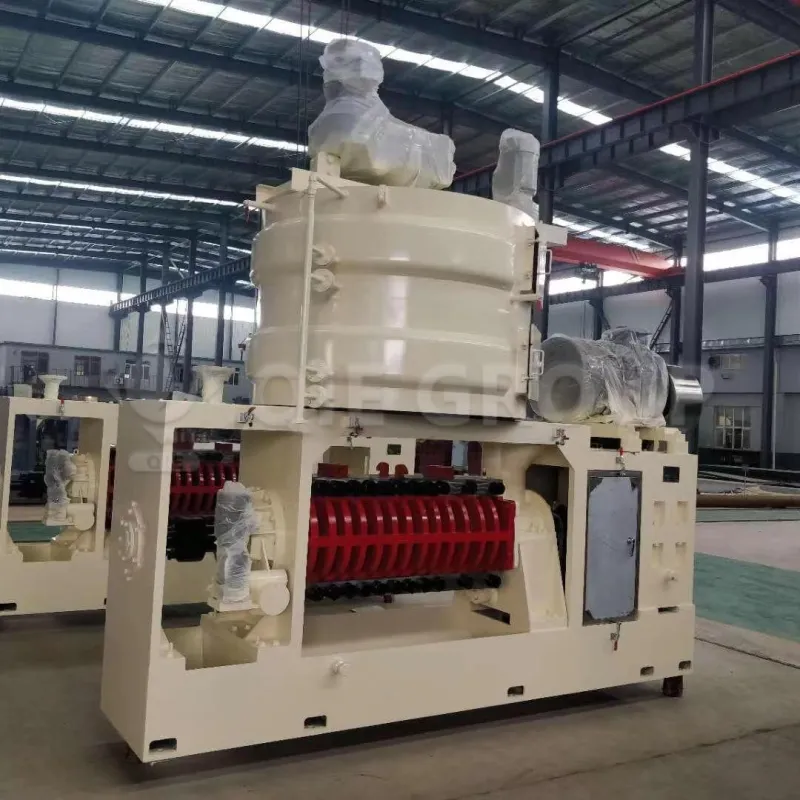
Mechanical pressing is commonly used when the process objective and feedstock characteristics are suitable for direct oil recovery through screw pressing. For larger oilseed plants, pre-pressing plus solvent extraction can be considered when additional oil recovery from press cake is required.
The key point for equipment selection is that extraction technology should be evaluated according to the complete process objective. A higher-capacity extractor is not necessarily a better solution if upstream preparation, feeding, or downstream recovery cannot support it.
Why Equipment Configuration Matters
Extraction performance depends on how equipment works together.
Potential causes of poor actual extraction performance include:
- Uneven feed distribution
- Poorly prepared flakes
- Incorrect residence time
- Unstable temperature
- Inadequate solvent contact
- Excessive equipment loading
- Inefficient oil or solvent recovery
This is why oil extraction efficiency in an oil processing plant should be measured across the complete processing system.
A properly designed extraction section needs stable material flow from pretreatment through extraction and into oil recovery. Equipment capacity should therefore be matched between connected stages instead of being evaluated independently.
Which Operating Parameters Should Be Controlled?
Even when the correct extraction technology has been selected, operating conditions determine whether the plant can achieve its expected performance.
The main parameters include:
- Feed rate
- Residence time
- Feed moisture
- Temperature
- Material loading
- Solvent circulation, where applicable
- Oil recovery conditions
- Steam and heat consumption
These parameters should be considered together because improving one performance indicator can affect another.
For example, increasing extraction intensity may reduce residual oil, but it can also increase energy consumption or affect throughput stability. The target should therefore be a balanced operating point rather than the lowest possible residual oil at any cost.
Feed Rate and Residence Time
Stable feed rate is particularly important for continuous extraction.
If material enters the extractor too quickly, the available residence time may be insufficient for effective extraction. If the feed rate is too low, the equipment may be underutilized and operating costs per ton may increase.
The actual feed rate should therefore be matched with:
- Extractor working capacity
- Feedstock characteristics
- Required residence time
- Solvent-to-material conditions
- Downstream recovery capacity
When evaluating factors affecting oil extraction efficiency, engineers should compare actual throughput with residual oil and operating consumption rather than looking only at the equipment's rated TPD.
Temperature Control
Temperature affects oil viscosity, solvent behavior, and extraction conditions.
Insufficient temperature control can reduce extraction performance, while excessive heating can increase energy consumption and create unnecessary thermal stress.
A well-integrated system therefore needs stable heating and appropriate heat recovery rather than simply increasing steam input.
For solvent extraction plants, temperature control should also be considered together with evaporation, condensation, and solvent recovery requirements.
What Does the 350TPD Ukraine Project Show?
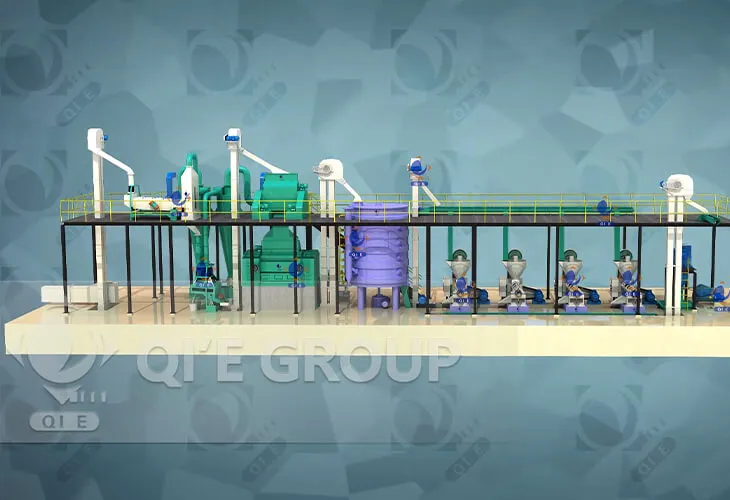
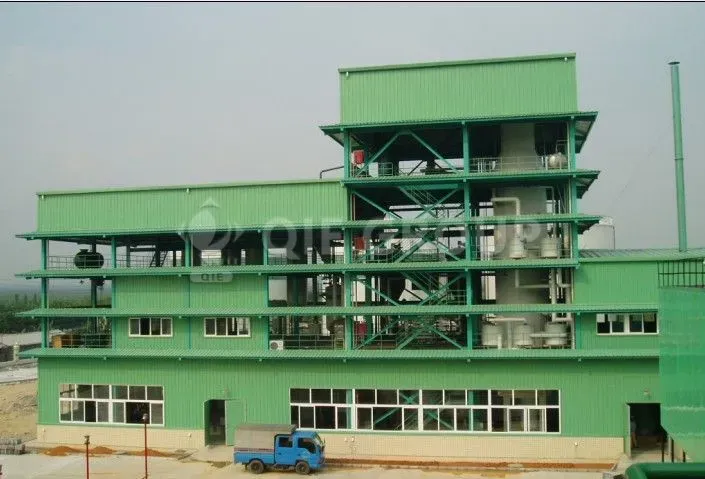
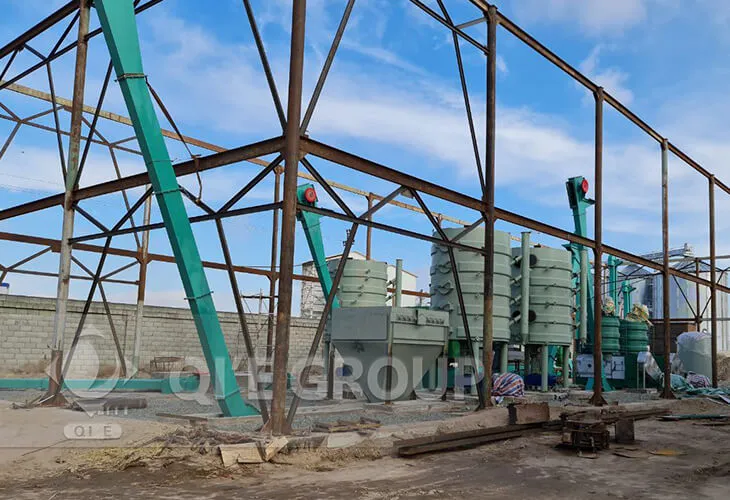
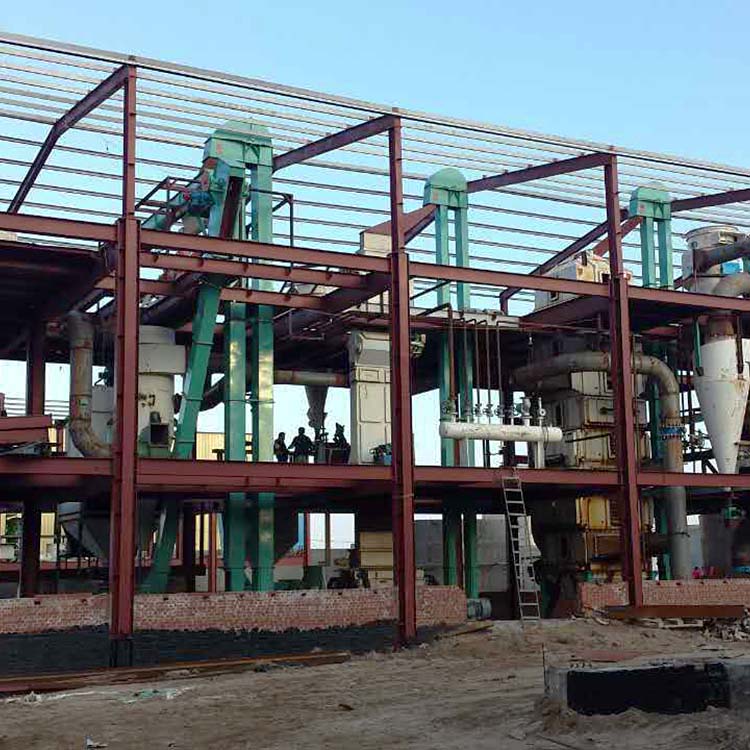
A practical example is the 350TPD rapeseed and sunflower seed extraction workshop project in Ukraine.
The project was designed for a daily processing capacity of 350 tons and was configured specifically for rapeseed and sunflower seed. Its process included screening, crushing, drying, and pressing before the extraction and oil recovery sections.
The project also incorporated a continuous extraction system, tail-gas recovery, liquid-ring vacuum equipment, and multi-stage heat exchange. These systems were configured as part of the overall extraction and recovery process rather than treating the extractor as an isolated machine.
The project documentation reports stable operation at approximately 350 TPD, together with stable oil quality and controlled energy and solvent consumption.
The main engineering lesson is that extraction performance depends on the interaction between feed preparation, extraction, oil recovery, solvent recovery, and operating control. Meeting the nominal capacity of the extractor alone does not guarantee efficient oil recovery.
How Can You Diagnose Low Oil Extraction Efficiency?
When an oil processing plant shows poor oil recovery, replacing the extractor should not be the first response. The more reliable approach is to trace the process from raw material to final recovery and identify where the actual loss occurs.
A useful troubleshooting sequence is:
Raw Material → Pretreatment → Extraction → Oil Recovery → Solvent Recovery → Performance Data
This sequence helps distinguish a true extraction bottleneck from problems caused by feed preparation, operating conditions, or downstream recovery.
Common Symptoms and What to Check
| Symptom | Possible Cause | What to Check |
|---|---|---|
| High residual oil in cake or meal | Poor extraction conditions | Feed preparation, residence time, temperature, extraction conditions |
| Unstable throughput | Uneven feeding or pretreatment | Feed distribution, particle size, moisture, conditioning |
| High solvent consumption | Inefficient recovery | Evaporation, condensation, vacuum, tail-gas recovery |
| High steam consumption | Poor heat integration | Heat exchange, evaporation, heating conditions |
| Variable oil recovery | Changing feedstock or operating conditions | Feedstock quality, moisture, temperature, process parameters |
| Capacity below design | Process bottleneck | Complete production line rather than extractor capacity alone |
The purpose of this diagnosis is to determine where oil or processing capacity is being lost before making an equipment investment.
How Can You Improve Oil Extraction Efficiency?
Once the problem has been identified, optimization should proceed from upstream to downstream.
Step 1: Verify the Raw Material
First confirm that the feedstock remains within the specification used for the original process design.
Check:
- Oil content
- Moisture
- Impurities
- Seed condition
- Variation between batches
A significant change in feedstock can alter the appropriate operating conditions even when the equipment has not changed.
Step 2: Check Pretreatment Quality
The prepared material should have consistent physical characteristics before entering pressing or extraction.
For a plant processing both rapeseed and sunflower seed, this is particularly important because different feedstocks may require different preparation conditions.
The key question is:
Is the extraction section receiving material in the condition for which it was designed?
If not, adjusting the extraction equipment may only treat the symptom rather than the cause.
Step 3: Measure Residual Oil
Residual oil in press cake or meal is one of the most useful indicators for evaluating extraction performance.
Do not evaluate the plant from throughput alone. Compare residual oil with:
- Feedstock type
- Daily throughput
- Moisture and temperature
- Energy consumption
- Solvent consumption, where applicable
This provides a more reliable basis for deciding whether process adjustment or equipment modification is necessary.
Step 4: Check the Extraction Section
If feed preparation is stable, evaluate the extraction equipment and its operating window.
Important points include:
- Feed distribution
- Residence time
- Temperature
- Solvent circulation
- Material loading
- Mechanical condition
The objective is to determine whether the equipment is operating within the conditions required for the target recovery and throughput.
Step 5: Check Oil and Solvent Recovery
If the extraction section is performing consistently but overall recovery remains unsatisfactory, inspect the downstream recovery system.
For solvent extraction plants, check:
- Miscella concentration
- Evaporation
- Condensation
- Vacuum conditions
- Solvent circulation
- Tail-gas recovery
- Heat recovery
Poor recovery can increase oil, solvent, or energy losses without indicating a fundamental problem with the extractor itself.
Should You Increase Equipment Capacity to Improve Oil Extraction Efficiency?
Not necessarily.
Increasing equipment capacity can be appropriate when the existing system is consistently operating above its practical throughput. However, a larger extractor or press will not solve problems caused by:
- Poor pretreatment
- Incorrect moisture
- Unstable feeding
- Insufficient residence time
- Inadequate temperature control
- Poor oil recovery
- Inefficient solvent recovery
A better investment decision is to identify the actual bottleneck first.
For example, if a plant is designed for 350 TPD but the pretreatment section cannot provide stable material flow at that rate, installing a larger extractor will not automatically increase effective production.
The same principle applies when residual oil remains high. If the cause is poor conditioning or unstable feed distribution, increasing extractor capacity may increase equipment cost without producing a proportional improvement in oil recovery.
A Practical Decision Rule
Before changing equipment capacity, ask:
- Is the existing equipment operating above its practical throughput?
- Is the feed material properly prepared?
- Are moisture and temperature within the required operating range?
- Is residence time sufficient?
- Are oil and solvent recovery systems functioning properly?
- Is residual oil higher than the defined process target?
Only after these questions are answered should equipment modification or capacity expansion be considered.
What Should Buyers Check Before Selecting an Extraction System?
For a new oil processing plant, buyers should evaluate extraction equipment as part of the complete process rather than comparing machine capacity alone.
Equipment Selection Checklist
1. Feedstock compatibility
Is the equipment designed for the specific oilseed or oilseeds that will be processed?
2. Pretreatment matching
Is the pretreatment capacity matched with the extraction capacity?
3. Feed stability
Can the system maintain consistent material distribution and loading?
4. Residual oil target
Is the expected residual oil in press cake or meal clearly specified?
5. Moisture and temperature control
Are the required feed moisture and temperature conditions defined?
6. Extraction conditions
Are residence time, material loading, and solvent circulation requirements clearly established where applicable?
7. Recovery system
Does the configuration include the required oil recovery and solvent recovery equipment?
8. Heat integration
Has heat exchange and recovery been considered to control steam and energy consumption?
9. Throughput
Can the complete processing line—not just the extractor—maintain the required daily capacity?
10. Performance verification
Can actual operating data such as residual oil, throughput, energy use, and solvent consumption be used to verify performance?
These questions give buyers a more useful technical basis for comparing suppliers and process configurations.
Engineering Recommendations
For an oil processing plant with low extraction efficiency, the first step should be measurement rather than immediate equipment replacement.
A practical engineering approach is:
- Verify that the feedstock matches the original design specification.
- Check whether pretreatment is producing consistent material.
- Measure residual oil together with throughput and operating consumption.
- Review extraction parameters before modifying equipment.
- Inspect oil and solvent recovery systems for downstream losses.
- Upgrade equipment only after the actual bottleneck has been identified.
For a new project, the same principle should be applied during equipment selection. The target is not simply to install equipment with a specified TPD rating, but to create a process configuration in which pretreatment, extraction, recovery, and utilities can operate together at the required capacity.