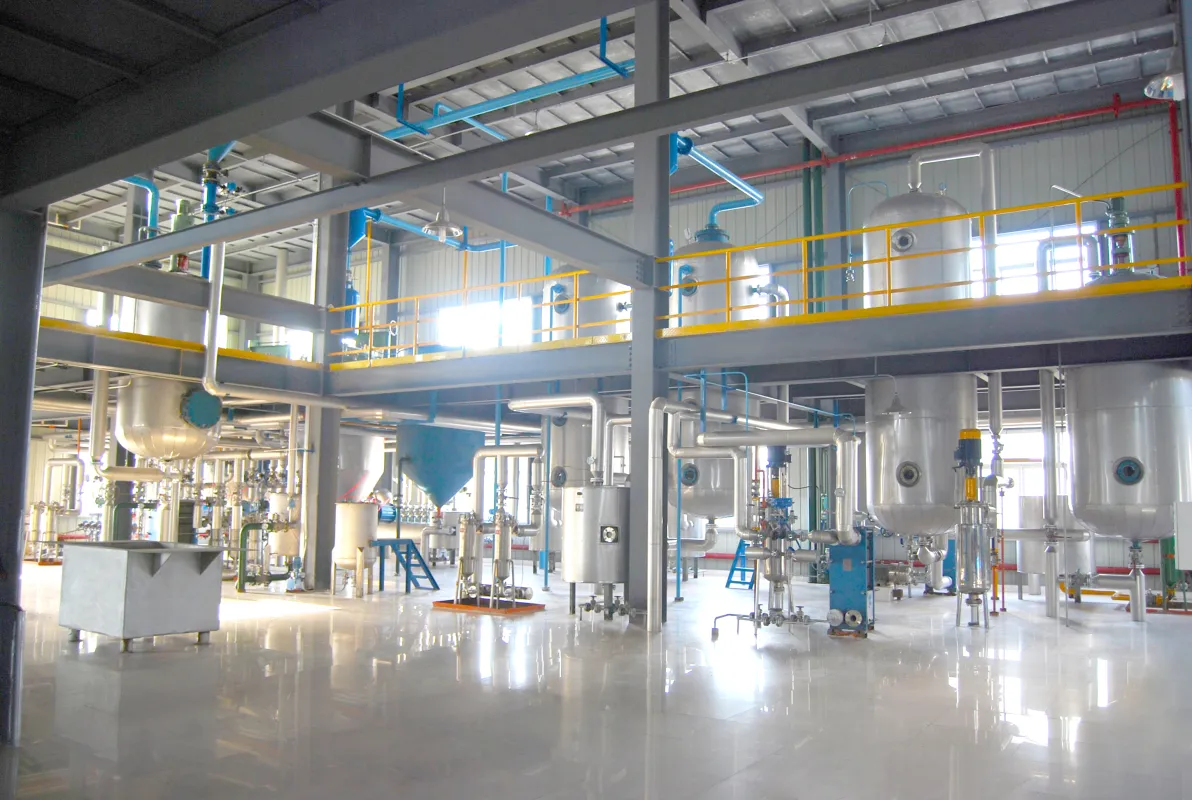
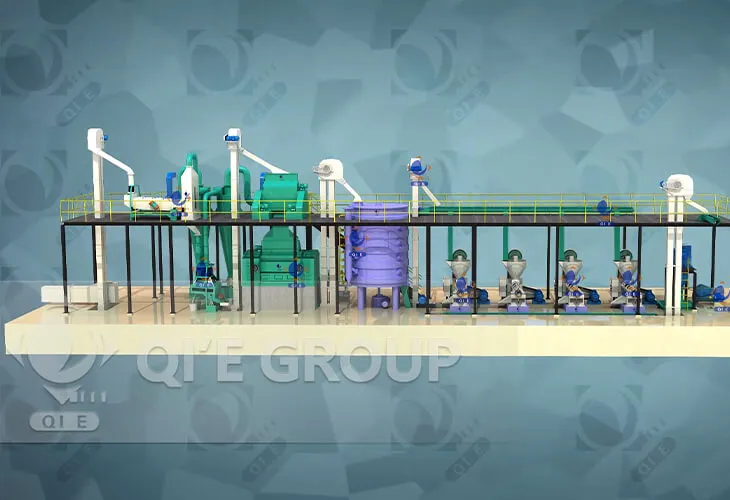
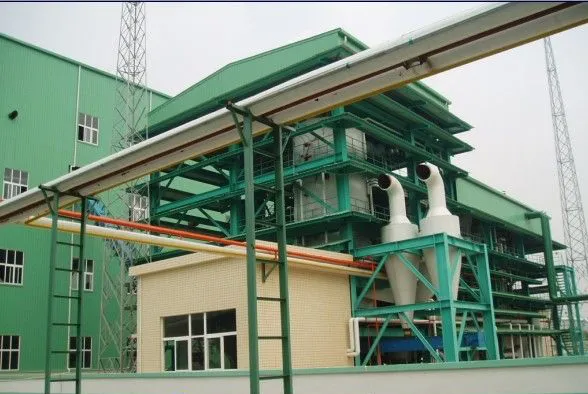
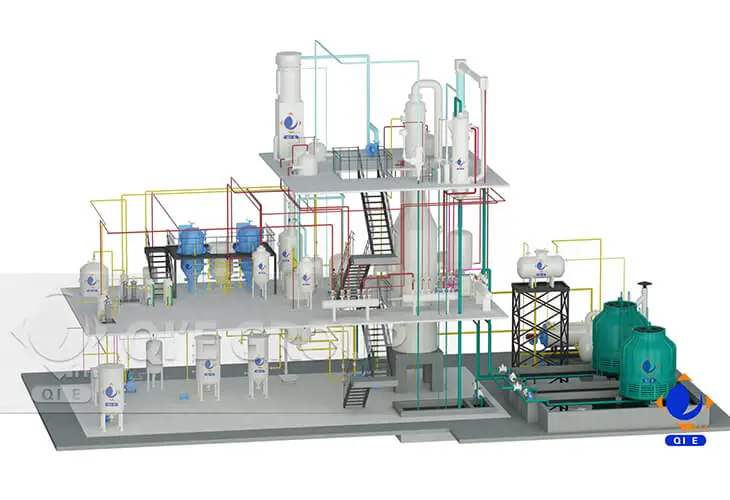
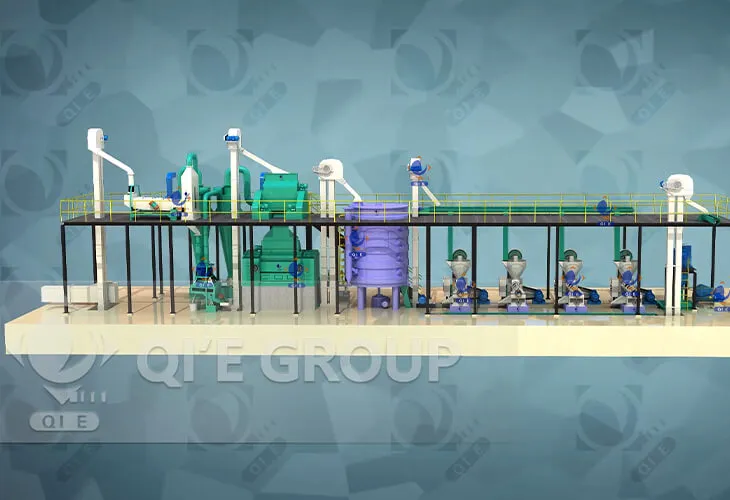
Built for process engineers and plant operators, this guide explains the sesame oil production line steps end-to-end—so you can design, scale, and operate with confidence. Content provided by QIE Group, a specialist sesame oil production line manufacturer with global turnkey delivery.

While recipes and equipment differ by product target (cold-pressed gourmet vs. refined edible oil), the sesame oil production line’s main steps typically include:
In Chinese-language searches, you may also see these terms: “芝麻油生产线制造商” (sesame oil production line manufacturer), “芝麻油生产线步骤” (sesame oil production line steps), and “芝麻油生产线的主要步骤” (the main steps of a sesame oil production line).
Quality starts at the gate. A typical intake station includes a receiving pit, magnetic separator, scalper, and air aspirator to remove ferrous materials, stones, dust, and straw. Target foreign matter after cleaning: ≤0.5% by weight.
Dehulling improves oil quality and reduces pigments and phospholipids. Depending on variety and customer preference, hull removal can be partial or full. Grading ensures uniform particle size for consistent heat and mass transfer downstream.
Right moisture protects yield. Typical pre-press moisture setpoint for sesame: 5–7%. Continuous dryers (hot air or fluidized) followed by tempering bins stabilize moisture distribution and reduce press torque.
For aromatic hot-pressed oil, roasting develops flavor precursors and lowers oil viscosity. Indicative parameters: 120–160°C for 20–40 minutes depending on seed type, moisture, and flavor profile. For cold-pressed premium oil, skip roasting and keep temperatures ≤45°C to protect volatiles and antioxidants.
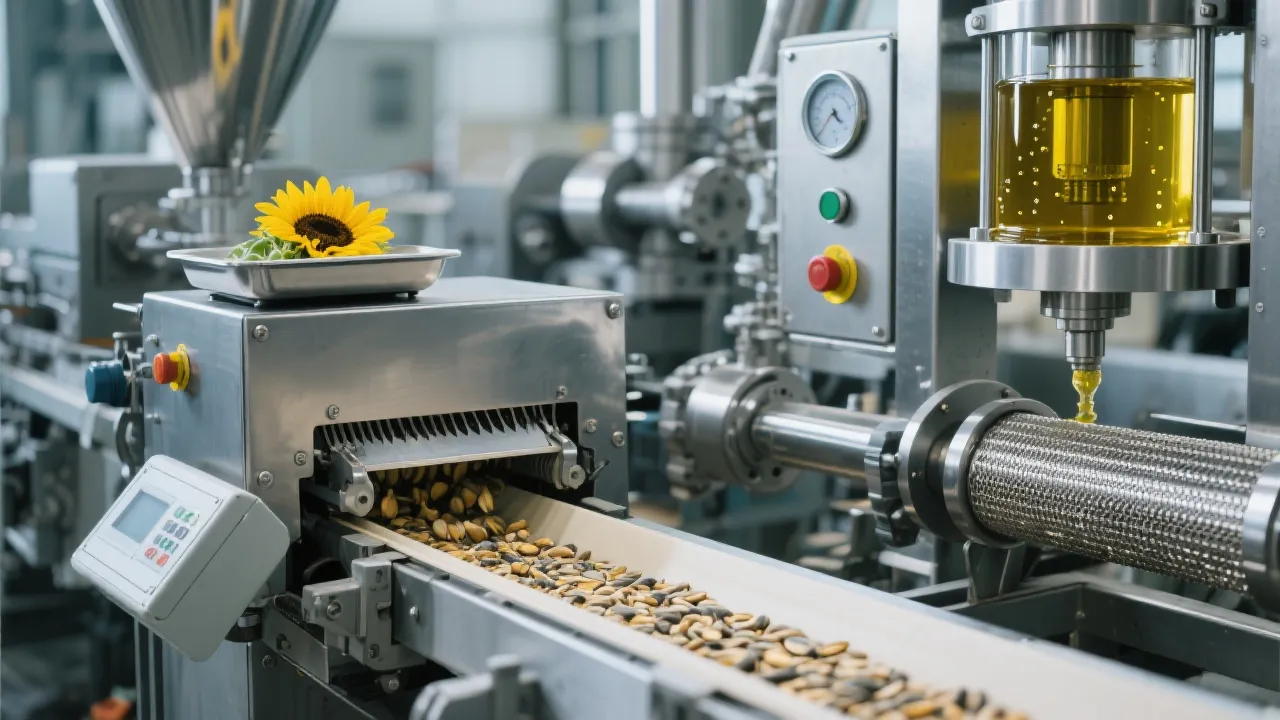
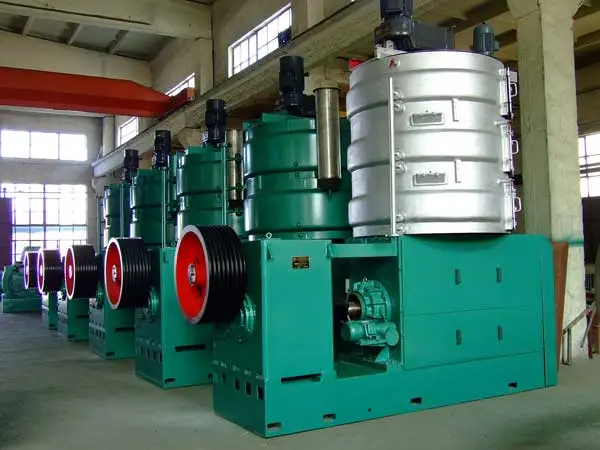
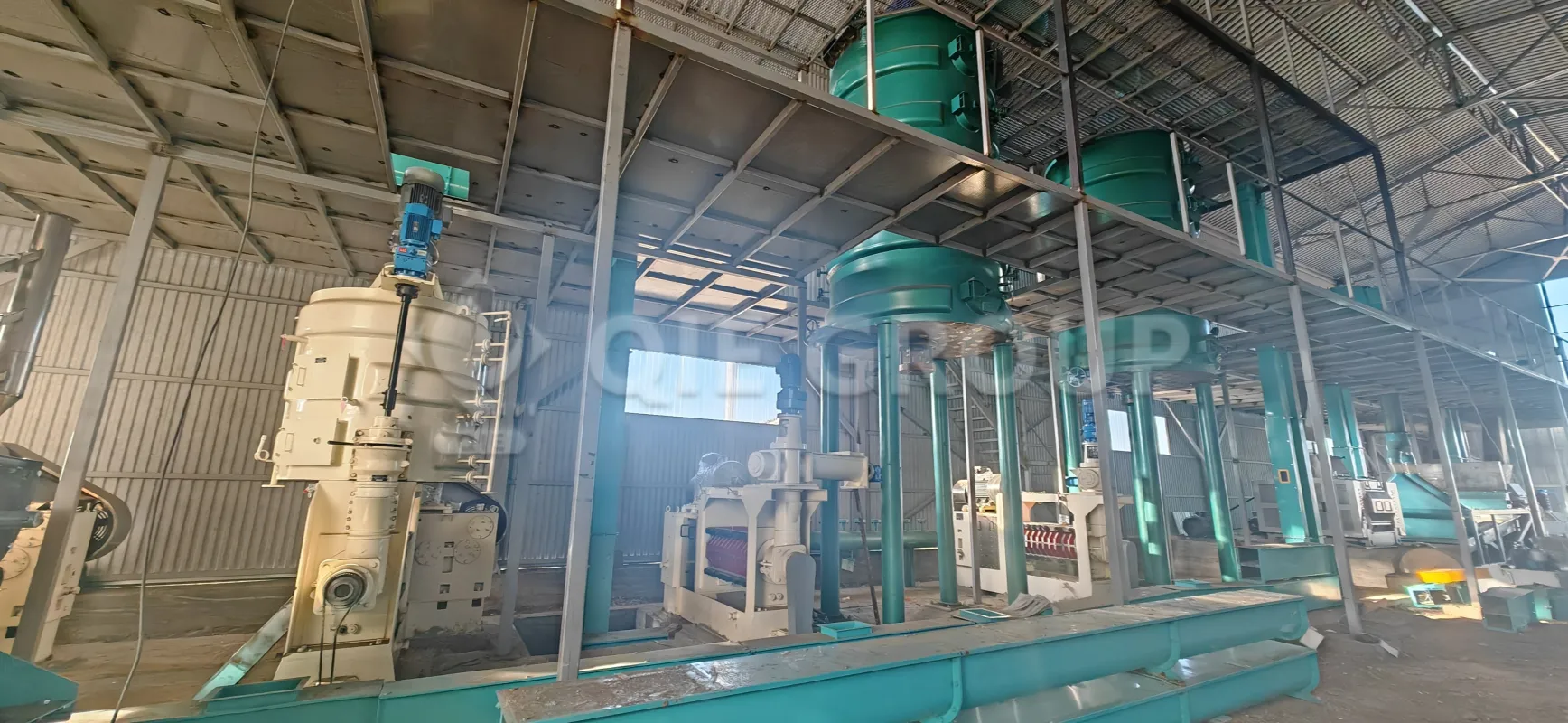
Screw presses (single or twin) expel oil mechanically. Expected residual oil in cake after hot pressing: 8–12%; after cold pressing: 12–16%. Oil content of sesame seed is typically 45–55%, so multi-press or a press-then-extract configuration is common where maximum yield matters.
Fresh press oil contains fines, gums, and phosphatides. Decanter centrifuges, settling tanks, and pressure leaf filters/polishing filters reduce insolubles to <10 ppm before storage or refining. For cold-pressed gourmet grades, gentle filtration preserves color and aroma.
Where economics favor high recovery, press cake goes to a continuous extractor (e.g., Rotocel) using food-grade hexane. Typical residual oil in meal after extraction: ≤1%. Integrated DTDC (desolventizer-toaster-dryer-cooler) ensures safe solvent removal and meal quality.
Refining sequence depends on target market and product label. Chemical refining is common; physical refining can be used for selected qualities.

Nitrogen-blanketed storage tanks reduce oxidation. Inline polishing filters and plate heat exchangers maintain clarity. For retail, use high-barrier bottles (amber PET, glass) to protect aroma; for bulk, line flexi-tanks or drums to minimize oxygen ingress.
Sesame meal (high-protein) is valuable for feed or food applications; quality depends on dehulling and toasting severity. Utilities—steam, power, chilled water, compressed air—and a validated CIP program underpin safe, efficient operations.
Values below are indicative for feasibility and comparison. Final specs are tailored to seed origin, desired grade, and local utilities.
| Parameter | Typical Range/Target | Notes |
|---|---|---|
| Line Capacity (seed) | 1–300 metric tons/day | Modular, scalable skids available |
| Seed Oil Content | 45–55% w/w | Varies by origin and season |
| Residual Oil in Press Cake | 8–16% (hot lower, cold higher) | Lower with tandem press or extraction |
| Extraction Residual Oil (Optional) | ≤1% | With DTDC and solvent recovery |
| Roast Temperature/Time | 120–160°C for 20–40 min | For hot-pressed aromatic oil |
| Moisture Before Pressing | 5–7% w/w | Improves flow and yield |
| Steam Demand (with refining) | 200–450 kg/ton seed | Depends on thermal integration |
| Electrical Power | 45–90 kWh/ton seed | Press+refining; plant-level average |
| Materials of Construction | SS304/SS316 in product contact | Food-grade gaskets and piping |
| Automation Level | Semi to fully automated (PLC/SCADA) | Recipe and traceability ready |
| Option | Best For | Pros | Considerations |
|---|---|---|---|
| Cold Press + Light Filtration | Premium gourmet oil (aroma, nutrients) | Clean label, robust flavor, minimal processing | Lower yield; temperature control is critical |
| Hot Press (Roasted) + Filtration | Aromatic culinary oils (Asian, Middle East) | Higher yield than cold press; strong aroma | Careful roast control; manage color and gums |
| Press + Solvent Extraction + Refining | High-volume, cost-optimized edible oil | Maximum oil recovery; consistent specs | Capex/permits; solvent safety and training |
While every plant is unique, most sesame oil projects follow similar cost drivers. Without quoting specific numbers, here is where budgets typically go and how to optimize:
QIE Group helps you map capex to payback by simulating yield vs. utility trade-offs, line speed, and SKU mix. We provide budgetary proposals fast so you can align equipment choices with sales forecasts and raw material variability.
As a dedicated sesame oil production line manufacturer, QIE Group delivers engineering-led, outcome-focused solutions:
Whether you target cold-pressed premium oils or high-throughput refined segments, we configure the sesame oil production line steps to match quality specs and cost targets—without compromising safety or uptime.
Sesame typically contains 45–55% oil. Hot pressing recovers most of the oil mechanically, leaving 8–12% in cake; cold pressing leaves more. Adding solvent extraction reduces residual oil to ≤1% for maximum overall yield.
Not always. Dehulling improves color, flavor, and refining losses but adds equipment and handling. Gourmet cold-pressed oils often benefit; some hot-pressed markets accept partial or no dehulling if color specs allow.
Chemical refining offers broad flexibility for sesame’s natural gums and pigments. Physical refining can be attractive for certain crude profiles and when minimizing chemical use is a priority. QIE Group can pilot both routes.
Keep process temperatures low, minimize oxygen pickup (nitrogen blanketing), use gentle filtration, and choose high-barrier packaging. Short residence times and cool storage preserve volatiles and antioxidants.
Plan for saturated steam (process and heating), electrical power (presses, drives, controls), cooling/chilled water (deodorizer and polishers), compressed air, and nitrogen for blanketing. QIE provides a utility balance for your capacity and climate.
Get a tailored process flow, mass balance, utility list, and budgetary quotation from our engineering team—fast. From seed to shelf, we align line design to your market and ROI.
Request a Proposal & 48-Hour Budgetary Quote 螺旋榨油机维护
螺旋榨油机故障排除
植物油加工设备保养
榨油机维修技巧
设备使用寿命延长
soybean oil deacidification process
Refining process optimization
Processes to improve the quality of soybean oil
low-temperature oil extraction
sunflower seed oil nutrition retention
high-quality crude oil production
screw press technology
edible oil quality comparison
peanut oil processing equipment
peanut oil pretreatment machine
peanut oil pressing machine
equipment matching
processing plant configuration
Coconut oil production line
Oil production line physical pressing
Physical pressing process in coconut oil production line
螺旋榨油机维护
螺旋榨油机故障排除
植物油加工设备保养
榨油机维修技巧
设备使用寿命延长
soybean oil deacidification process
Refining process optimization
Processes to improve the quality of soybean oil
low-temperature oil extraction
sunflower seed oil nutrition retention
high-quality crude oil production
screw press technology
edible oil quality comparison
peanut oil processing equipment
peanut oil pretreatment machine
peanut oil pressing machine
equipment matching
processing plant configuration
Coconut oil production line
Oil production line physical pressing
Physical pressing process in coconut oil production line

-2.jpg?x-oss-process=image/resize,h_800,m_lfit/format,webp)



.png?x-oss-process=image/resize,h_100,m_lfit/format,webp)
.png?x-oss-process=image/resize,h_100,m_lfit/format,webp)
.png?x-oss-process=image/resize,h_100,m_lfit/format,webp)