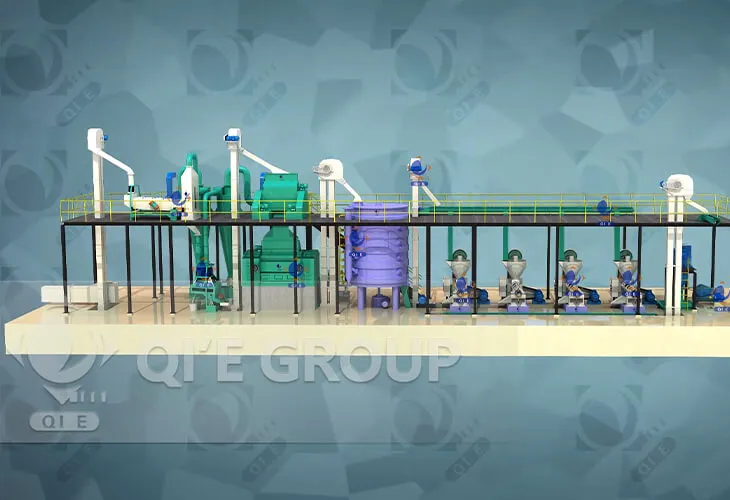
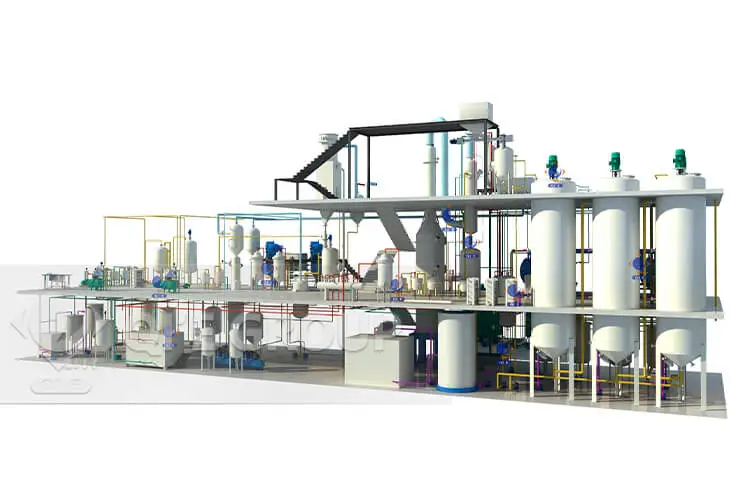
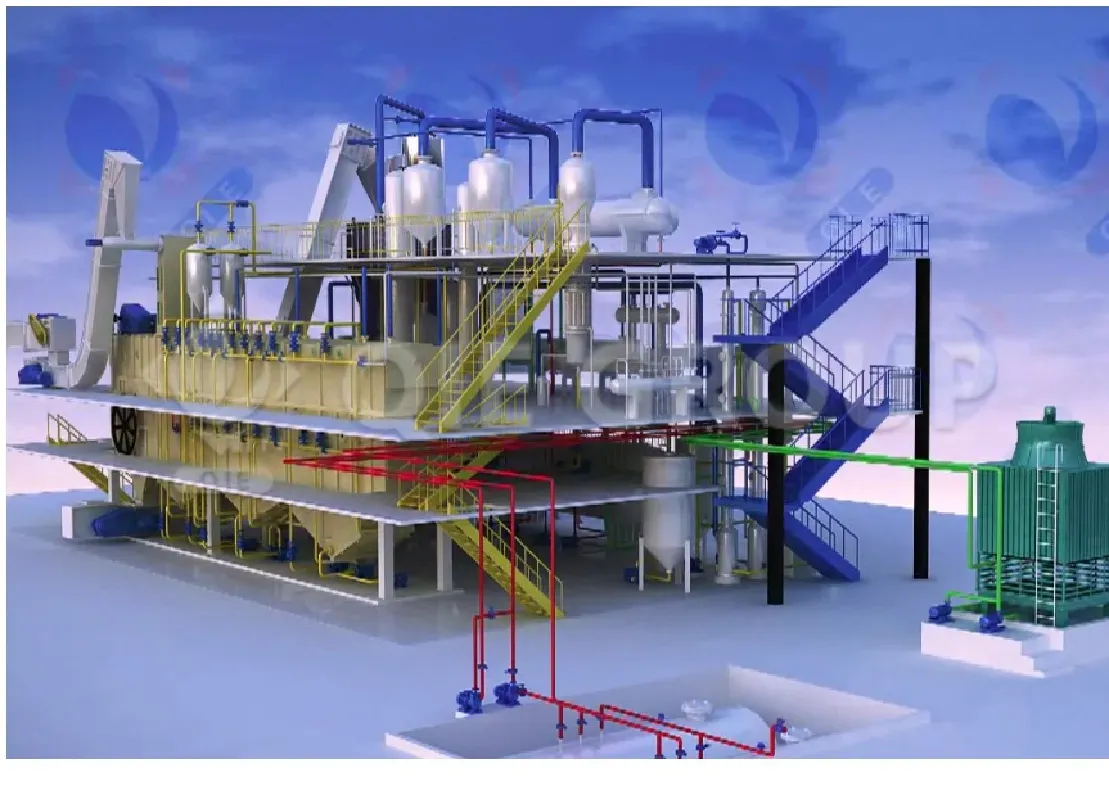
Based on QIE GROUP's turnkey experience, we scientifically defined the production capacity and expansion schedule of soybean oil plants.
When planning a soybean oil plant, the chosen production line capacity determines the investment amount, unit cost, inventory size, and subsequent expansion path. QIE GROUP offers a highly reliable evaluation method for soybean oil plants, their capacity, and production line capacity. This method covers market demand, raw material stability, process routes, energy and environmental protection, staffing, and compliance, helping investors clarify their products early on and facilitating faster profit generation later. The content is based on QIE GROUP's engineering and operational experience across multiple regions, enabling rapid estimation and comparison.
It is recommended to use the target annual sales volume as a starting point, and then work backwards to deduce the required daily processing capacity based on the effective number of working days and equipment utilization rate.
Practical computational logic
Reference values: Soybean oil content is typically 18%–20%; OEE (Overall Efficiency) is more robust when calculated at 85%–90%; leaving a 15%–20% capacity margin facilitates seasonal fluctuations and maintenance.
Different production capacity ranges correspond to different process routes, levels of automation, and unit investment levels. The following are typical combinations to help you quickly identify the appropriate one.
| Production capacity level (t/d) | Applicable Scenarios | Recommended process | Typical energy consumption (per ton of raw material) | Personnel/Class | Land area reference (including warehousing) | Unit investment level |
|---|---|---|---|---|---|---|
| 10–50 | Trial production, regional brands, niche oil categories | Full pressing + simple refining (mainly physical refining) | Electricity 25–35 kWh; Steam 80–120 kg | 4–6 | 1,500–4,000 m² | Low |
| 100–300 | Regional markets, scalable pilot factories | Pretreatment + Pre-pressing + Small-scale leaching + Chemical/Physical refining | Electricity 18–28 kWh; Steam 180–260 kg | 10–16 | 5,000–10,000 m² | middle |
| 500–1,000 | Mainstream commercial supply, export-oriented | Pretreatment + pre-pressing + continuous leaching + full-function refining (dewaxing/deodorization) | Electricity 15–25 kWh; Steam 220–320 kg | 25–35 | 10,000–20,000 m² | Medium-high |
| 1,500–3,000+ | Large-scale integrated grain and oil, futures and spot market base | High-efficiency pretreatment + pre-pressing + cyclic leaching + energy recovery refining + by-product deep processing | Electricity 12–20 kWh; Steam 200–280 kg | 45–70 | 20,000–40,000 m²+ | high |
Note: Energy consumption is a typical range and is affected by raw material moisture content, equipment energy efficiency, heat exchange and recovery, and operating strategies; land area includes process area and basic storage, and the specific amount is subject to the plan.
.jpg)
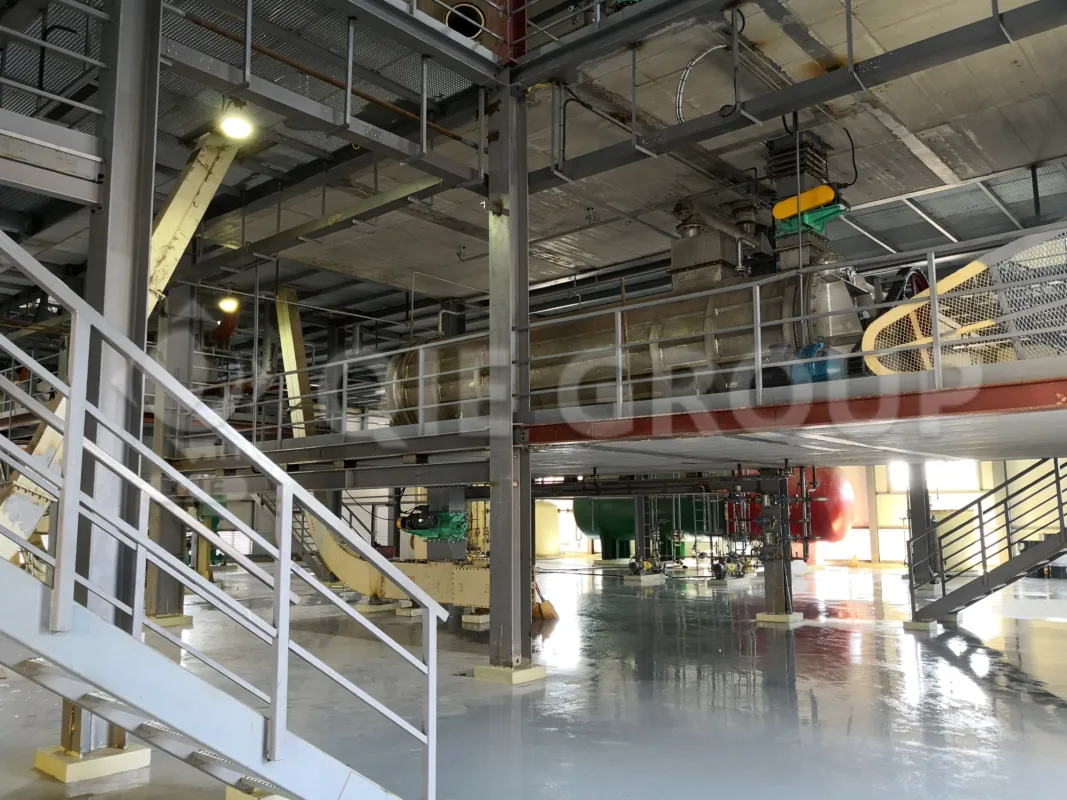
The project utilizes a "pre-treatment + pre-pressing + compact leaching + basic refining" approach, ensuring controllable investment, energy consumption, and labor costs, and validating the synergy between brand channels and raw materials.
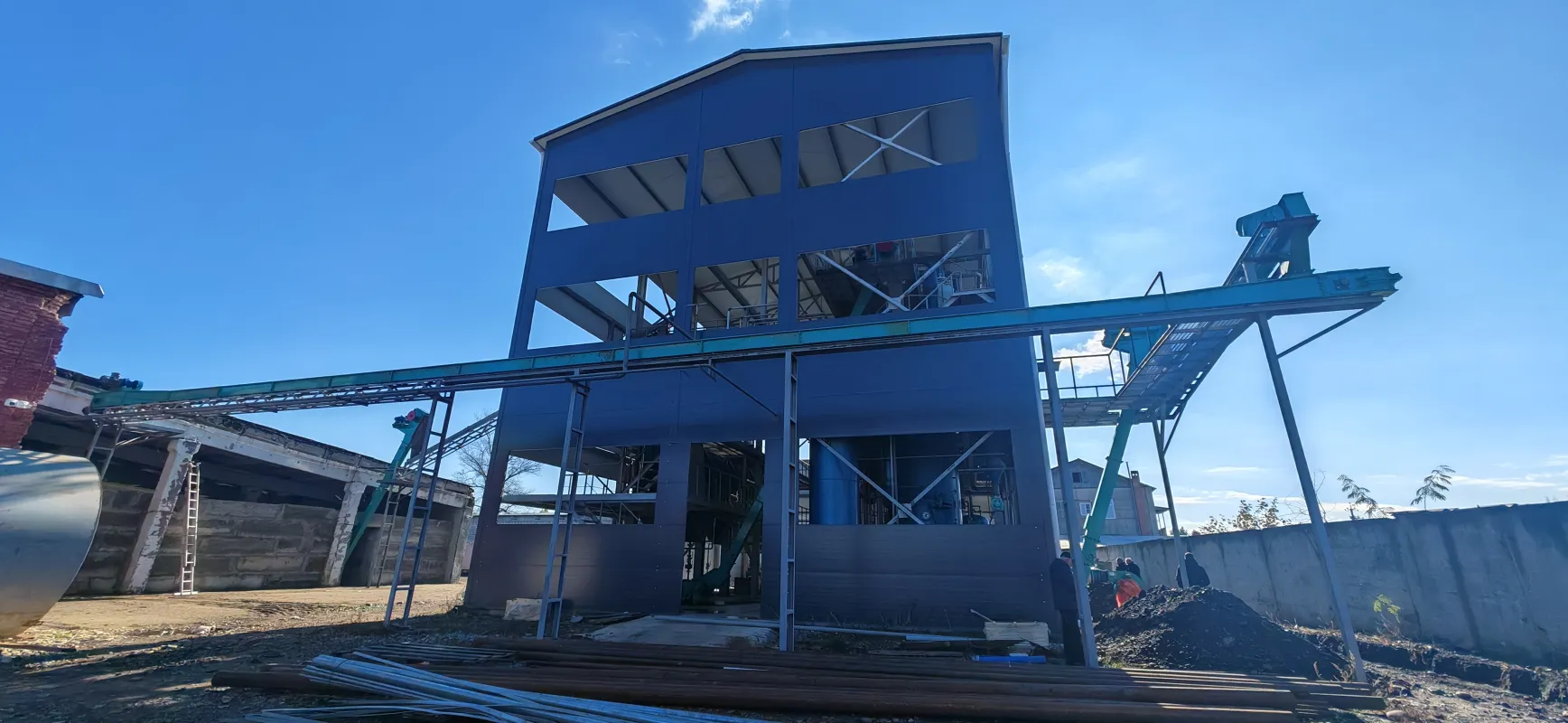
By introducing continuous leaching, thermal integration and solvent recovery optimization, and adding dewaxing and deodorization units, the unit cost is significantly reduced and the product grade is improved, supporting regional scale supply and export.
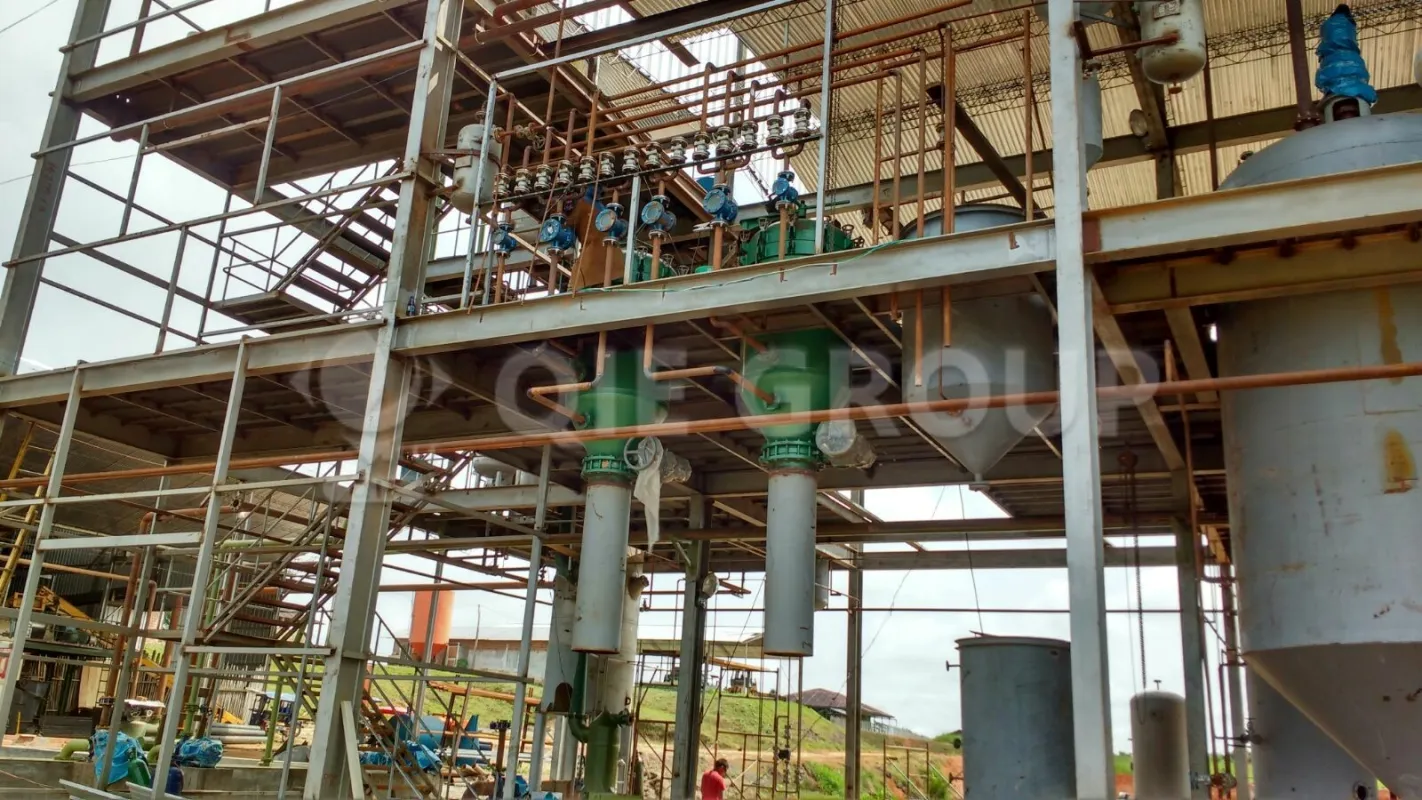
In collaboration with ports, railways, and bulk tank farms, an integrated system of "pressing, leaching, refining, packaging, and deep processing of by-products" is formed.
As a full-process supplier, QIE GROUP provides integrated services from basic design, 3D master plan, key equipment manufacturing, installation and commissioning to employee training and maintenance support, ensuring that soybean oil plant production lines can be put into operation as scheduled and stably achieve OEE targets.
Get a customized process package, energy consumption model, and investment list based on your market and raw material conditions, and receive a preliminary solution within 24–72 hours.
Consult QIE GROUP | Obtain soybean oil plant capacity assessment and process solutionsNot necessarily. For capacities of 10–50 t/d, full pressing can be used, which requires less investment and has a simpler process; however, the residual oil content is higher, and the oil yield is lower than with pre-pressing + leaching. When the capacity is ≥100 t/d and lower unit costs are desired, leaching is recommended.
Total energy consumption increases with production volume, but unit energy consumption typically decreases. Scale-up facilitates heat recovery, improves equipment efficiency, and enables continuous operation, leading to improvements in both electricity and steam consumption per unit.
It is recommended to reserve process areas, tank areas, and utility capacity (boilers, cooling towers, power distribution) for expansions of 1–2 times the capacity on the site plan. This will allow for modular insertion and rapid expansion as the market grows.
Key indicators include residual solvent, acid value, peroxide value, color, and metal ion and phospholipid content. Parallel online monitoring and laboratory testing help stabilize refining losses and ensure regulatory compliance.
Compact production lines can be operational in approximately 6–9 months; medium to large-scale projects typically take 9–14 months, depending on approvals, civil engineering, and equipment delivery. The QIE GROUP can shorten the overall project timeline through modular and parallel operations.
 Selection of cottonseed processing equipment
Comparison of mechanical pressing and solvent extraction
Cottonseed oil processing equipment
Peanut oil production line equipment
Peanut oil equipment selection
Energy-saving and high-efficiency peanut oil machinery
Peanut oil press parameters
Intelligent peanut oil equipment
Dewaxing process
Improved quality of edible oil
winterization system
Oil refining technology
Dewaxing equipment operation
Edible oil degumming process
Edible oil refining process
Explanation of Edible Oil Degumming Process
Soybean oil production line
Small soybean oil press plant
Soybean oil press plant
Selection of cottonseed processing equipment
Comparison of mechanical pressing and solvent extraction
Cottonseed oil processing equipment
Peanut oil production line equipment
Peanut oil equipment selection
Energy-saving and high-efficiency peanut oil machinery
Peanut oil press parameters
Intelligent peanut oil equipment
Dewaxing process
Improved quality of edible oil
winterization system
Oil refining technology
Dewaxing equipment operation
Edible oil degumming process
Edible oil refining process
Explanation of Edible Oil Degumming Process
Soybean oil production line
Small soybean oil press plant
Soybean oil press plant

.jpg?x-oss-process=image/resize,h_800,m_lfit/format,webp)




.png?x-oss-process=image/resize,h_100,m_lfit/format,webp)
.png?x-oss-process=image/resize,h_100,m_lfit/format,webp)
.png?x-oss-process=image/resize,h_100,m_lfit/format,webp)